

Guide · Safety and emergencies
Lead Paint Awareness
A gentle, practical guide to lead-based paint in older homes, how to keep everyone safe, and especially how to protect little ones.
Where to start
- Seeing peeling or chipping paint?
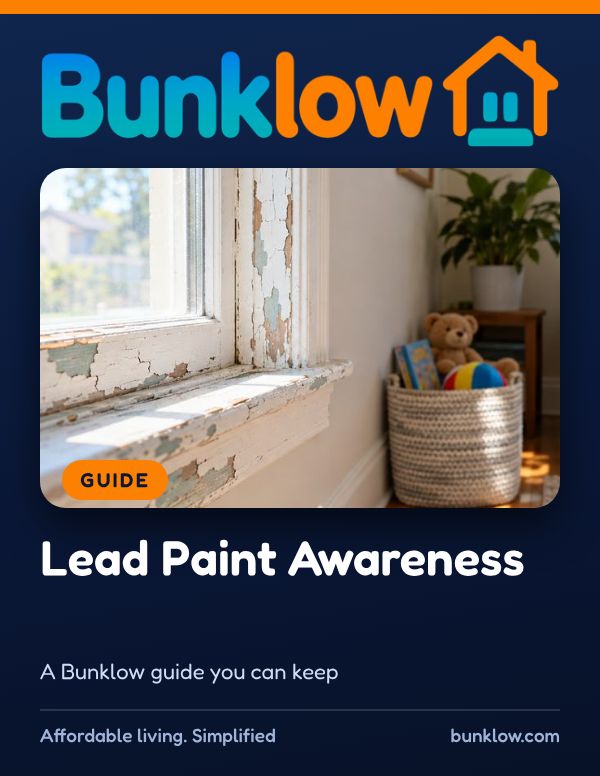
Gently keep children and pets away, and please don’t scrape or sweep it. See if you see peeling or chipping paint.
- Living in a home built before 1978?
Tick through everyday habits that protect. A damp paper towel on the window sills each week is a great first step.
- Owner of an older home?
See before a lease or sale begins and repairs and renovations.
The short version
Homes built before 1978 may have lead-based paint. Paint in good condition is usually not the hazard. Peeling, chipping and dust are.
Young children and pregnant people are most at risk. A doctor can arrange a simple blood lead test.
Everyday habits help a lot: wet-wipe sills and floors, wash hands and toys often, and share peeling paint right away.
Federal rules require disclosure and an EPA pamphlet for most pre-1978 homes, and paint-disturbing repairs should use lead-safe practices.
Rules can also differ from place to place, so we’d gently encourage a quick look at your local rules. If you ever have questions, we would love to help.
Four simple rules
- 1Homes built before 1978 may have it
Lead-based paint was banned for homes in 1978. Older homes may still have it under newer layers.
- 2Intact paint is usually not the hazard
Peeling, chipping and dust from sanding or scraping are what create risk, especially on windows, doors and stairs.
- 3Children need the most care
Young children and pregnant people are most at risk, and no safe blood lead level in children has been identified.
- 4Repairs should be lead-safe
Work that disturbs paint in older homes should use lead-safe practices, and paid work generally calls for an EPA-certified firm.
Everyday habits that protect
From the guide’s own habits. Tick each one as you go. Your ticks stay on this device. These are examples; your home may need others.
All done. Little hands are better protected.
A few things to avoid
- Please don’t sand, scrape or dry sweep painted surfaces in an older home without checking first.
- Please don’t let children chew on or play near peeling paint, window sills or porch railings.
- Please don’t start painting or repair projects in a home built before 1978 without written permission and lead safe practices.
- Please don’t use a regular household vacuum to clean up paint chips. It can spread fine dust.
A damp paper towel is one of the best tools in an older home. Wiping window sills once a week catches dust before little hands find it.
If you see peeling or chipping paint
- Take a breath. Peeling paint can be handled safely, and you were right to notice it.
- Gently keep children and pets away from the area until it is addressed.
- Don’t scrape or sweep it. Pick up loose chips with a damp paper towel and wipe the area with a wet cloth.
- Take a photo and share it in writing with whoever handles repairs.
- Repairs should be done with lead safe work practices, by trained and certified workers where required.
- After the work, the area should be carefully cleaned, and you may ask about a dust wipe test for peace of mind.
When you share a paint concern, a quick photo with something for scale, like a coin, helps everyone understand the size of the area right away.
Where lead paint is usually found
Lead paint is most often found on windows and sills, doors and frames, stairs and railings, porches and exterior trim in homes built before 1978. Surfaces that rub or get bumped, like windows opening and closing, can create fine dust even when the paint looks fine.
Wet cleaning beats dry. Dry dusting and sweeping can stir up fine lead dust. A damp cloth or mop, rinsed often, picks it up instead of spreading it.
Before a lease or sale begins
From the guide’s list for older homes. Tick each one as you go. Your ticks stay on this device. These are examples; your home may need others.
All done. The home is ready for its next chapter.
Repairs and renovations
From the guide’s list for work in older homes. Tick each one as you go. Your ticks stay on this device. These are examples; your home may need others.
All done. The work was planned to be lead safe.
Guides that go well with this one
Helpful resources
U.S. EPA: Real Estate Disclosures about Potential Lead Hazards and U.S. EPA: Protect Your Family from Sources of Lead. Rules differ from place to place, so please check the EPA pages and the rules where your home is. If you have health concerns, please talk with a doctor. A local landlord or tenant association, your health department, or an attorney in your area can help with questions.
Like it on paper?
The printable checklist for this guide is fillable, with a screen version and an ink saver print version. Keep it on your phone or pin it to the fridge.
How much do you remember?
4 quick questions from this guide, with a one line why for each. Totally optional, no sign in, and your answers are never saved.
Go deeper with The Perfect Move-In Checklist Workbook
Simple, step by step checklists you can write in for moving in: the move in walk, moving day, your first week, utilities, keys and more.
Keep the full guide handy
The PDF has everything: everyday habits, what to do when something goes wrong, common myths, helpful resources and plenty of real-world tips. Print it, save it or share it with anyone who could use it.
Download the PDFMore guides



This guide shares general information to help you, and is not legal or medical advice. Bunklow does not inspect properties or test for lead.