

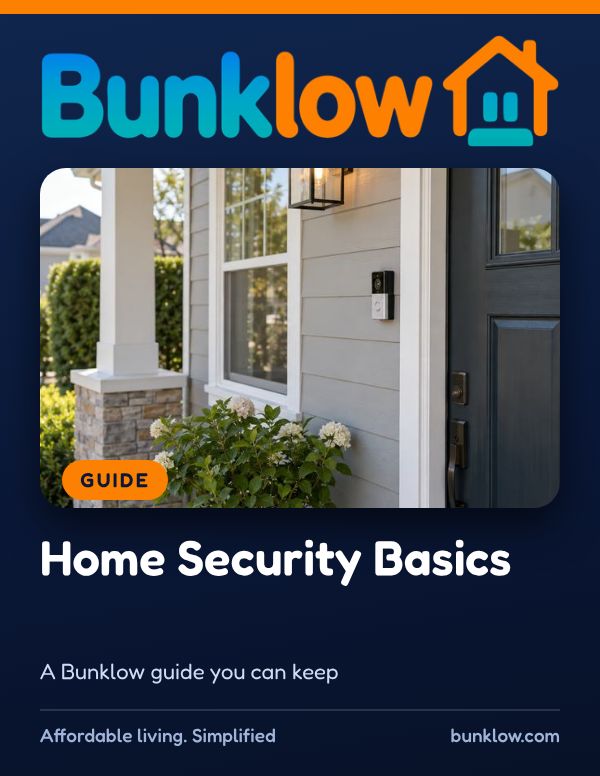
Guide · Safety and emergencies
Home Security Basics
A friendly, practical guide to locks, lighting, doors, windows, cameras and good neighbors, so everyone in the home can rest easy.
Where to start
- Something looks wrong at home?
Please don’t go inside. Go somewhere safe and call 911. See if something feels wrong.
- Building safer habits?
Tick through everyday security habits.
- Getting a home ready?
The short version
Most good home security comes from simple, shared habits: locking up every time, good lighting, and neighbors who look out for each other.
Use the deadbolt, secure sliding doors with a dowel or pin lock, light entries and side yards, and never hide a spare key outside.
When you travel, make the home look lived in with light timers, held mail and a helpful neighbor, and save travel photos for when you’re back.
Cameras can help watch entries and package areas, but should never record inside anyone else’s private space, and everyone in the home should know where they are.
Rules about locks, entry and recording vary from place to place, so we’d gently encourage a quick look at the rules where your home is. If you ever have questions, we would love to help.
Four simple rules
- 1Lock up, every time
Doors and windows locked, even for a quick trip to the mailbox or when you are home. Most entries happen through an unlocked door or window.
- 2Light the way
Keep entries, walkways and side yards well lit at night, so there are no dark places to hide.
- 3Keep keys under control
No spare keys under mats or planters. Know who has a key, and re-key between residents.
- 4Respect everyone’s privacy
Cameras should protect the home, never watch inside someone else’s private space.
Everyday security habits
From the guide’s own everyday habits. Tick each one as you go. Your ticks stay on this device. These are examples; your home may need others.
All done. These simple habits make a home a much harder target.
If something feels wrong
- If you come home and something looks wrong, like a broken window or open door, please don’t go inside.
- Go somewhere safe, like a neighbor’s home or your car, and call 911.
- Wait for the police to say it is safe before going back in.
- Try not to touch anything until the police have looked, and take photos of what you see.
- Let whoever manages the home know in writing, and ask about repairs to doors, locks or windows.
- Contact your insurance company if things were taken or damaged. Your police report number will help.
Keep your phone and keys on your nightstand at night. If you hear something worrying, you can call for help or set off your car alarm without leaving the room.
A few things to avoid
- Please don’t hide a spare key under a mat, planter or rock. Leave one with someone you trust instead.
- Please don’t prop open shared entry doors or let strangers follow you into a building.
- Please don’t post travel plans or “away” photos online until you are back home.
- Please don’t change or add locks without talking with whoever manages the home first.
The quick errand habit: many break ins happen through a door left unlocked “just for a minute.” Locking up every time, even when stepping out to the mailbox, closes the easiest way in.
Locks, lights and entries
From the guide’s list for making a home secure. Tick each one as you go. Your ticks stay on this device. These are examples; your home may need others.
All done. The home is ready to help everyone rest easy.
After a concern or break in
- Treat a broken lock, door or window as urgent, and repair or secure it the same day whenever possible.
- After a break in or lost key, rekey the affected locks promptly.
- Replace burned out exterior lights quickly, and check timers after power outages.
- Keep a written record of what was reported, what was done and when.
- Check in kindly with everyone in the home. A scare can be upsetting, and a caring word means a great deal.
- Ask together whether more lighting, a peephole or a door viewer would help everyone feel safer.
Swap the short screws in door strike plates and hinges for longer ones, about 3 inches, that reach the wall framing. It is a small change that makes a door much harder to force.
Cameras, sliding doors and travel
Cameras can be a good way to watch entries, driveways and package areas, as long as everyone in the home knows they are there. Cameras should never record inside bedrooms, bathrooms or anyone else’s private space, and recording audio is restricted in many places.
Sliding doors and windows can sometimes be lifted or pried. A wooden dowel or metal bar in the track, plus a simple pin lock, makes them much harder to open.
When you travel, use light timers, pause or hold mail and deliveries, and ask a neighbor to park in the driveway or take in flyers.
For more, see National Crime Prevention Council: Home and Neighborhood Safety and FTC: How To Secure Your Home Security Cameras.
Guides that go well with this one
Like it on paper?
The printable checklist for this guide is fillable, with a screen version and an ink saver print version. Keep it on your phone or pin it to the fridge.
How much do you remember?
4 quick questions from this guide, with a one line why for each. Totally optional, no sign in, and your answers are never saved.
Go deeper with The Perfect Move-In Checklist Workbook
Simple, step by step checklists you can write in for moving in: the move in walk, moving day, your first week, utilities, keys and more.
Keep the full guide handy
The PDF has everything: everyday habits, what to do when something goes wrong, common myths, helpful resources and plenty of real-world tips. Print it, save it or share it with anyone who could use it.
Download the PDFTake it with you
- Bunklow Home Guide 094: Exterior Security Floodlight Motion Sensors and Photocell CalibrationA printable guide to exterior security floodlight motion sensors and photocell calibration, in plain steps.See it in the shop
- Bunklow Home Guide 118: Exterior Deadbolt Latch Throw Depth and Jam Strike Plate AlignmentA printable Bunklow guide to exterior deadbolt latch throw depth and jam strike plate alignment: plain steps, how often to check, and when to call a pro.See it in the shop
- Family, Safety and Smart Home Checklist PackThe Family, Safety and Smart Home checklists in one pack, fillable on screen or printable.See it in the shop
More guides
This guide shares general information to help you, and is not legal or safety advice. Bunklow does not inspect properties.