

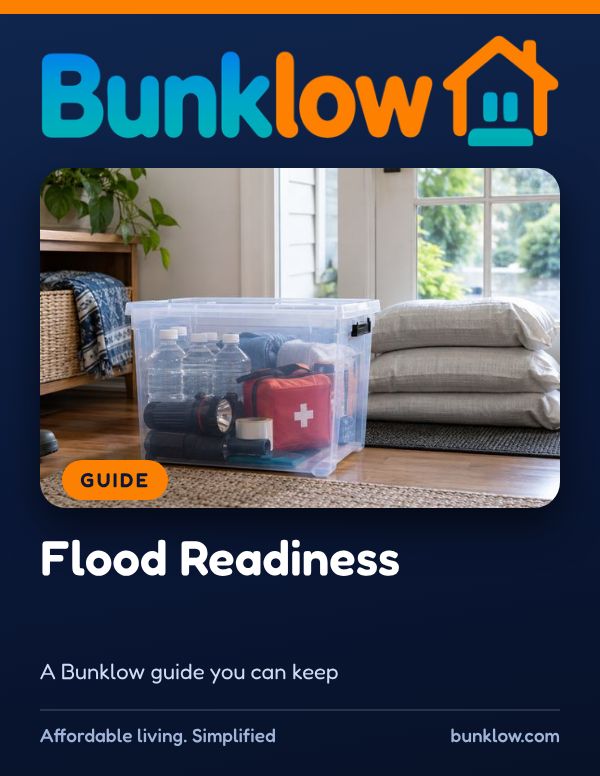
Guide · Safety and emergencies
Flood Readiness
A friendly, practical guide to getting ready for a flood, staying safe while it happens, and recovering well afterward, including what insurance usually does and doesn’t cover.
Where to start
- Water rising now?
Follow the instructions of local officials. If told to leave, leave right away. See if water is rising.
- Want to get ready this week?
Work through the getting your household ready checklist.
- Wondering about insurance?
Read the insurance basics to know.
The short version
Floods can happen almost anywhere, often with little warning. A little preparation protects people first and belongings second.
Sign up for alerts, know your routes to higher ground, keep a go-bag and keep important papers in a waterproof container.
Never walk, swim or drive through floodwater. Six inches of moving water can knock a person down.
Most homeowners and renters policies don’t cover floods, and flood policies usually take about 30 days to start. Look into coverage early.
Rules after a flood differ from place to place, so we’d gently encourage a quick look at the rules where your home is. If you ever have questions, we would love to help.
Four simple rules
- 1Turn around, don’t drown
Never walk, swim or drive through floodwater. Six inches of moving water can knock a person down.
- 2People first, things second
When officials say to leave, please leave. Belongings can be replaced. You cannot.
- 3Flood coverage is usually separate
Most homeowners and renters policies don’t cover flooding, and flood policies usually have a waiting period.
- 4Water and power don’t mix
Stay out of water that may touch outlets or wiring, and let a professional check before power goes back on.
Getting your household ready
From the guide’s own steps. Tick each one as you go. Your ticks stay on this device. These are examples; your home may need others.
All done. You’re ready, and that brings real peace of mind.
If water is rising
- Take a breath, and follow the instructions of local officials. If told to leave, leave right away.
- Move to higher ground. If you are trapped in a building, go to the highest level, but not a closed attic.
- If it is safe and you have time, turn off power at the main breaker from a dry spot.
- Stay out of floodwater and away from downed power lines. Call 911 if you are in danger.
- Let family know you are safe, and use texts to keep phone lines clear.
- Once you are safe, take photos of the damage and share what happened in writing.
You did exactly the right thing. Never walk, swim or drive through floodwater.
Insurance basics to know
- Most standard homeowners and renters insurance policies do not cover flood damage.
- Flood insurance is usually a separate policy, and renters can often buy coverage for belongings.
- Flood policies usually take about 30 days to begin, so it is wise to look into coverage well before flood season.
- A flood watch means flooding is possible, so get ready. A flood warning means flooding is happening or about to, so act on official instructions right away.
Your insurance agent and Ready.gov are good places to ask what applies to your home.
After the water goes down
From the guide’s own list. Your ticks stay on this device. These are examples; every flood is a little different.
All done. Thank you for taking such good care of everyone.
Guides that go well with this one
Like it on paper?
The printable checklist for this guide is fillable, with a screen version and an ink saver print version. Keep it on your phone or pin it to the fridge.
How much do you remember?
4 quick questions from this guide, with a one line why for each. Totally optional, no sign in, and your answers are never saved.
Go deeper with The Perfect Seasonal Home Care Checklist Workbook
Simple, step by step checklists you can write in, one topic at a time, to help any home stay warm, safe and dry through every season.
Keep the full guide handy
The PDF has everything: everyday habits, what to do when something goes wrong, common myths, helpful resources and plenty of real-world tips. Print it, save it or share it with anyone who could use it.
Download the PDFTake it with you
- The Perfect Emergency Ready Checklist WorkbookA fillable workbook with a screen version and an ink saver print version.See it in the shop
More guides
This guide shares general information to help you, and is not legal, insurance or medical advice. Always follow the instructions of local officials. Bunklow does not inspect properties or make repairs.