

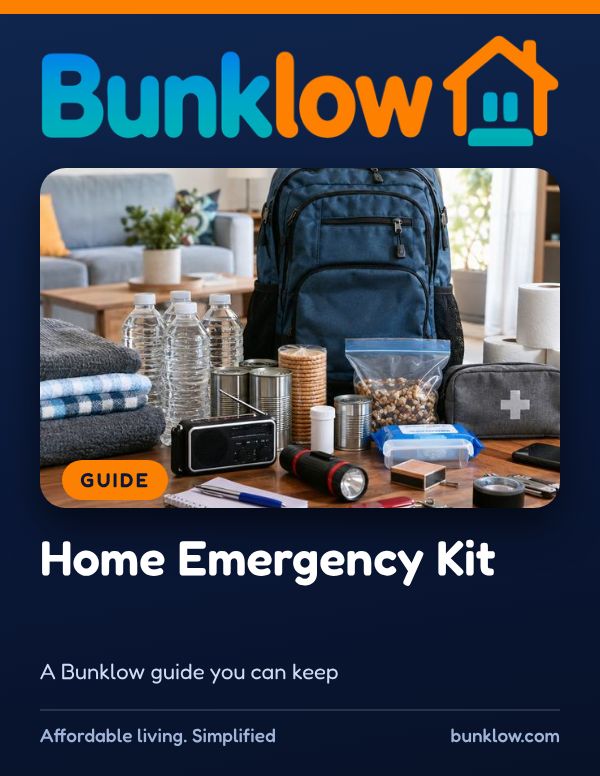
Guide · Safety and emergencies
Home Emergency Kit
A friendly, practical guide to building an emergency kit and a simple family plan, so everyone in the home knows what to do.
Where to start
- In an emergency right now?
Call 911 if anyone is hurt or in danger, and follow local officials. See when an emergency happens.
- Building a kit?
Tick through what to pack, a little at a time.
- Getting the home ready?
The short version
A home emergency kit and a simple family plan help everyone stay calm and safe during storms, wildfires, floods and earthquakes.
Start with water, about one gallon per person per day for several days, plus non-perishable food, a flashlight, a radio, batteries, first aid and medicine.
Agree on two meeting places and an out-of-area contact, find two ways out of every room, and practice together.
Learn the risks where your home is, follow local officials in an emergency, and refresh your kit about every six months.
Rules about emergencies and repairs differ from place to place, so we’d gently encourage a quick look at your local rules. If you ever have questions, we would love to help.
Four simple rules
- 1Water comes first
Plan on about one gallon of water per person per day, for drinking and sanitation, for at least several days.
- 2Make a plan, then share it
Agree on where to meet, who to call, and how to get out, and make sure everyone in the home knows it.
- 3Pack a grab-and-go bag
Keep the essentials in a sturdy bag or bin you can carry out the door in minutes.
- 4Refresh it twice a year
Check food, water, batteries and medicine about every six months, and update the plan as life changes.
What to pack
From the guide’s own packing list. Tick each one as you go. Your ticks stay on this device. These are examples; your home may need others.
All done. Your kit is ready. Set a reminder to refresh it in about six months.
When an emergency happens
- Stay calm and make sure everyone is safe. Call 911 if anyone is hurt or in danger.
- Follow instructions from local officials, whether that means staying in place or evacuating right away.
- If told to leave, grab your kit, pets and medicine, and go. Never wait to gather belongings.
- Head to your agreed meeting place, and check in with your out of area contact. Texts often get through when calls don’t.
- Stay out of damaged buildings, floodwater and areas near downed power lines.
- Once safe, share any damage to the home in writing, with photos, so repairs can begin.
Pick one friend or relative who lives out of the area as your family’s contact. During local emergencies, long distance calls and texts often get through more easily.
A few things to avoid
- Please don’t store the kit somewhere hard to reach, like a high attic shelf or behind heavy boxes.
- Please don’t forget pets. They need food, water, a leash or carrier and copies of their records too.
- Please don’t rely only on your phone for contacts. Write important numbers on paper too.
- Please don’t let the kit sit untouched for years. Food, water, batteries and medicine all expire.
Keep a pair of sturdy shoes and a flashlight by every bed. If something happens at night, broken glass and darkness are easier to handle.
Getting the home ready
From the guide’s planning list. Your ticks stay on this device. These are examples; your home may need others.
All done. Everyone in the home knows where things are and how to reach each other.
Know your local risks
Every area has its own risks. Take a few minutes to learn which ones matter most where your home is, and plan for those first. A few examples:
- Earthquakes: Drop, Cover and Hold On.
- Wildfires: know your evacuation zone and leave early.
- Floods: never walk or drive through floodwater.
Two ways out of every room: walk through the home together and find two ways out of each room. Make sure windows open easily and nothing blocks the doors. For more, see Ready.gov: Build a Kit.
Guides that go well with this one
Like it on paper?
The printable checklist for this guide is fillable, with a screen version and an ink saver print version. Keep it on your phone or pin it to the fridge.
How much do you remember?
4 quick questions from this guide, with a one line why for each. Totally optional, no sign in, and your answers are never saved.
Go deeper with The Perfect Seasonal Home Care Checklist Workbook
Simple, step by step checklists you can write in, one topic at a time, to help any home stay warm, safe and dry through every season.
Keep the full guide handy
The PDF has everything: everyday habits, what to do when something goes wrong, common myths, helpful resources and plenty of real-world tips. Print it, save it or share it with anyone who could use it.
Download the PDFTake it with you
- Bunklow Home Guide 024: Safe Emergency Battery and LED Lighting During Extended BlackoutsA printable Bunklow guide to safe emergency battery and led lighting during extended blackouts: plain steps, how often to check, and when to call a pro.See it in the shop
- The Perfect Emergency Ready Checklist WorkbookA fillable workbook with a screen version and an ink saver print version.See it in the shop
More guides


This guide shares general information to help you, and is not legal, medical or safety-code advice. In any emergency, please follow local officials and call 911. Bunklow does not inspect properties.