

Guide · Safety and emergencies
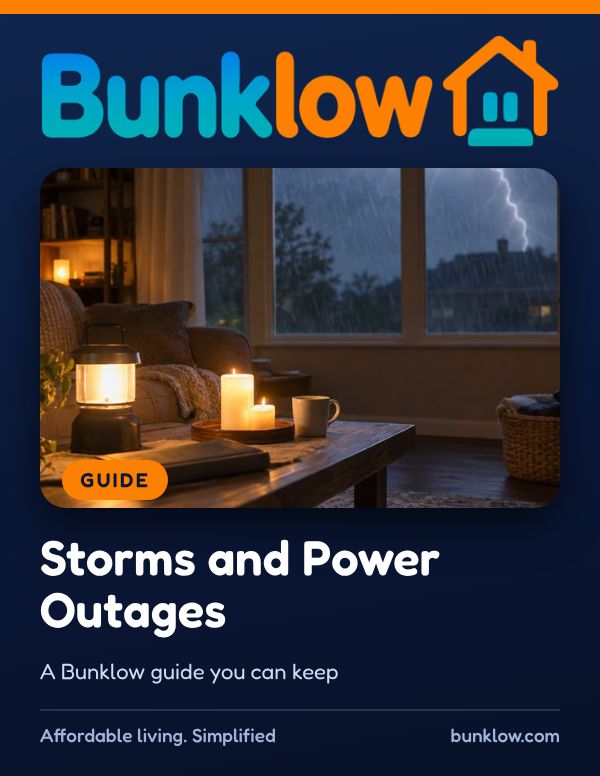
Storms and Power Outages
A friendly, practical guide to getting ready for storms, staying safe when the power goes out, and caring for the home afterward.
Where to start
- Power out right now?
Use flashlights, not candles. See when the power goes out.
- Wondering about the food?
Keep the fridge and freezer closed. See keeping food safe.
- Storm in the forecast?
Charge phones, find the flashlights, and work through the getting ready checklist.
- Storm just passed?
Check on everyone first. See after the storm passes.
The short version
Before a storm, gather flashlights, batteries, water, charged phones and a few days of food, and sign up for local alerts.
During an outage, keep the fridge and freezer closed. A closed fridge generally keeps food safe about four hours, and a full freezer about 48 hours.
Generators, grills and camp stoves must stay outside, more than 20 feet from windows, doors and vents. Keep a battery-powered CO alarm working.
Stay far from downed lines and floodwater, document any damage with photos, and have wet electrical items checked before use.
Rules about storm damage and repairs differ from place to place, so we’d gently encourage a quick look at your local rules. If you ever have questions, we would love to help.
Four simple rules
- 1Prepare before the storm
Flashlights, batteries, water, charged phones and a little food set aside make any outage easier.
- 2Keep the fridge closed
A closed refrigerator generally keeps food cold for about four hours, and a full freezer for about 48 hours.
- 3Generators always stay outside
Never run a generator, grill or camp stove indoors or in a garage. Keep generators more than 20 feet from windows, doors and vents.
- 4Stay far from downed lines
Treat every downed power line as live. Keep well away and call the utility or 911.
Getting ready together
From the guide’s own checklist. Tick each one as you go. Your ticks stay on this device. These are examples; your home may need others.
All done. You are ready for whatever the forecast brings.
When the power goes out
- Check that everyone is safe, and use flashlights rather than candles.
- Check whether neighbors have power too, then report the outage to the utility.
- Keep refrigerator and freezer doors closed as much as possible.
- Unplug electronics and turn off most appliances to protect them from a surge. Leave one light on so you know when power is back.
- Stay warm with layers and blankets, or cool with shade and water, and go to a warming or cooling center if the home becomes unsafe.
- Share any storm damage, leaks or outage problems in writing, with photos, once it is safe to do so.
When the power comes back, plug things in a few at a time.
Keeping food safe
A closed refrigerator generally keeps food safe for about four hours. A full freezer holds its temperature for about 48 hours, or about 24 hours if half full.
An appliance thermometer takes out the guesswork. The fridge should read 40°F or below and the freezer 0°F or below.
Generally, throw out perishable food like meat, dairy, eggs and leftovers that has been above 40°F for more than about two hours.
When in doubt, throw it out.
After the storm passes
- Check in with everyone in the home first. A kind call or message means a great deal.
- Walk the home once it is safe, looking for roof damage, leaks, fallen limbs and water in lower levels.
- Take photos of any damage before cleanup, and keep receipts for repairs and emergency work.
- Dry wet areas quickly. Materials that stay wet for more than a day or two can begin to grow mold.
- Have a licensed electrician check any outlets, appliances or panels that got wet before they are used.
- Follow up kindly until repairs are complete and everyone feels settled.
Stay far from downed lines and floodwater.
Guides that go well with this one
How much do you remember?
4 quick questions from this guide, with a one line why for each. Totally optional, no sign in, and your answers are never saved.
Go deeper with The Perfect Seasonal Home Care Checklist Workbook
Simple, step by step checklists you can write in, one topic at a time, to help any home stay warm, safe and dry through every season.
Keep the full guide handy
The PDF has everything: everyday habits, what to do when something goes wrong, common myths, helpful resources and plenty of real-world tips. Print it, save it or share it with anyone who could use it.
Download the PDFTake it with you
- Bunklow Home Guide 021: Refrigerator and Freezer Cold-Chain Preservation During Power OutagesA printable guide to refrigerator and freezer cold-chain preservation during power outages, in plain steps.See it in the shop
- Bunklow Home Guide 024: Safe Emergency Battery and LED Lighting During Extended BlackoutsA printable Bunklow guide to safe emergency battery and led lighting during extended blackouts: plain steps, how often to check, and when to call a pro.See it in the shop
- The Perfect Emergency Ready Checklist WorkbookA fillable workbook with a screen version and an ink saver print version.See it in the shop
More guides


This guide shares general information to help you, and is not legal, medical or safety-code advice. In any emergency, please call 911. Bunklow does not inspect properties.