

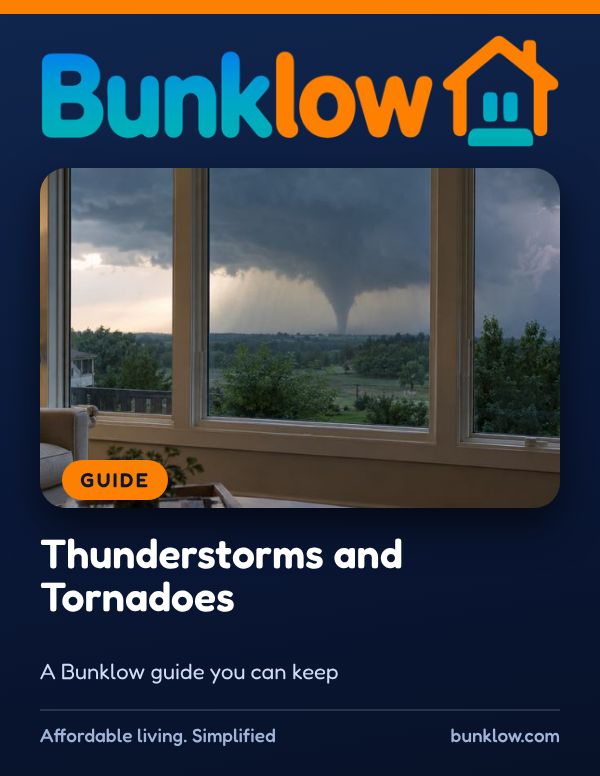
Guide · Safety and emergencies
Thunderstorms and Tornadoes
A friendly, practical guide to staying safe when storms roll in, from lightning and power surges to tornado watches, warnings and the safest place to shelter.
Where to start
- Tornado warning right now?
Go to your safe spot now. See when a tornado warning sounds.
- Storm season coming?
Pick your safe spot and work through the storm ready habits.
- Storm just passed?
Check on everyone first, and stay away from downed lines. See after a storm.
The short version
Storms don’t wait for anyone to be ready, and knowing where to go ahead of time turns a frightening moment into a calm plan.
When thunder roars, go indoors. Skip showers and corded phones during lightning, and protect electronics with surge protectors.
A tornado watch means plan; a warning means go to your safe spot now: the lowest floor, an interior room, away from windows.
After the storm, stay away from downed lines and flooded areas, take photos of damage and share it right away.
How storm damage is handled differs from place to place, so we’d gently encourage a quick look at the rules where your home is. If you ever have questions, we would love to help.
Four simple rules
- 1When thunder roars, go indoors
The National Weather Service says no place outside is safe when thunder is heard. Get inside right away.
- 2Watch means plan, warning means go
A tornado watch means conditions are favorable. A tornado warning means take shelter now.
- 3Lowest floor, interior room
Shelter in a small interior room on the lowest floor of a sturdy building, away from windows.
- 4Mind the wires after
Stay away from downed power lines and flooded areas after a storm, and report them.
Storm ready habits
From the guide. Tick each one as you go. Your ticks stay on this device. These are examples; your home may need others.
All done. Everyone knows where to go when the sky turns dark.
When a tornado warning sounds
- Go right away to your safe spot: the lowest floor, an interior room, away from windows.
- Get under something sturdy if you can, and cover your head and neck with your arms, pillows or a helmet.
- If you live in a mobile home, go to a sturdier building or storm shelter well before the storm arrives.
- Stay in your safe spot until the warning has ended and it is safe to come out.
- Once it is over, check on everyone, put on sturdy shoes, and watch for broken glass and downed lines.
- Take photos of any damage and share them in writing right away.
You did exactly the right thing.
After a storm passes
- Check that everyone is safe first, then look for damage once officials say it is safe.
- Keep everyone away from downed lines, and report them to the utility.
- Stay away from flooded areas.
- Photograph any damage and share it in writing.
- If anyone is hurt, please call 911 and reach out to a doctor.
Watch means plan, warning means go.
Guides that go well with this one
How much do you remember?
4 quick questions from this guide, with a one line why for each. Totally optional, no sign in, and your answers are never saved.
Go deeper with The Perfect Seasonal Home Care Checklist Workbook
Simple, step by step checklists you can write in, one topic at a time, to help any home stay warm, safe and dry through every season.
Keep the full guide handy
The PDF has everything: everyday habits, what to do when something goes wrong, common myths, helpful resources and plenty of real-world tips. Print it, save it or share it with anyone who could use it.
Download the PDFTake it with you
- The Perfect Emergency Ready Checklist WorkbookA fillable workbook with a screen version and an ink saver print version.See it in the shop
More guides

This guide shares general information to help you, and is not legal, insurance, medical or safety-code advice. Always follow the instructions of local officials and the National Weather Service. Bunklow does not inspect properties or make repairs.