

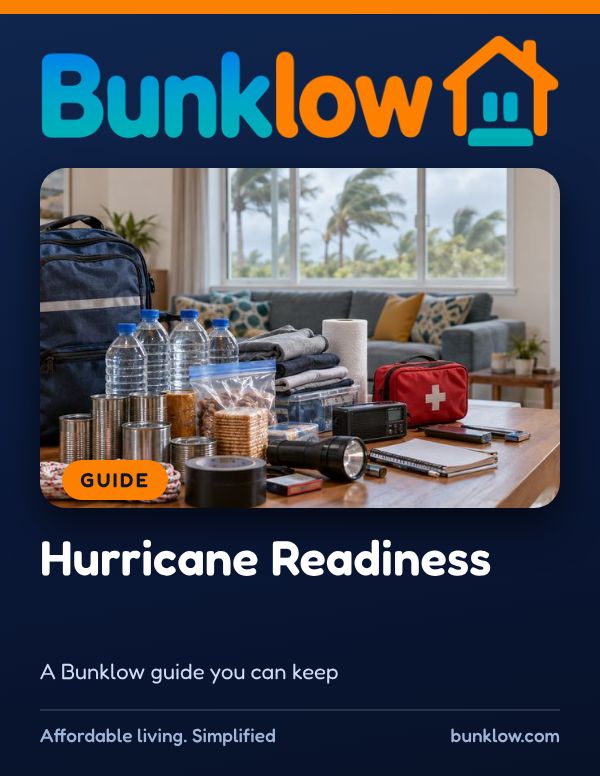
Guide · Safety and emergencies
Hurricane Readiness
A friendly, practical guide to getting ready for hurricane season, knowing when to leave, securing the home and staying safe after the storm passes.
Where to start
- A hurricane is coming?
Follow your local officials. If you are told to evacuate, leave right away. See when a hurricane is coming.
- Getting ready before the season?
Tick through steps to take before the season.
- Preparing the property?
The short version
Hurricanes give a little warning, and the people who plan before the season are the ones who stay calm and safe.
Know your evacuation zone, build a kit, protect important papers, and review insurance, including flood coverage, before storms form.
When officials say evacuate, please go. Storm surge and flooding cause most hurricane deaths.
After the storm, stay out of floodwater, keep generators outside, take photos of damage and share it right away.
Rules after a hurricane differ from place to place, so we’d gently encourage a quick look at the rules where your home is. If you ever have questions, we would love to help.
Four simple rules
- 1Know your zone
Find out now whether your home is in an evacuation zone, and where you would go.
- 2Leave when told
When officials order an evacuation, please go. Water, not wind, causes most hurricane deaths.
- 3Ready before the season
Build your kit, protect your papers and review insurance before a storm is on the way.
- 4Generators stay outside
Never run a generator indoors or in a garage. Carbon monoxide can kill quickly.
Steps to take before the season
From the guide’s own list. Tick each one as you go. Your ticks stay on this device. These are examples; your home may need others.
All done. Your household is ready before the season begins.
When a hurricane is coming
- Take a breath, and follow your local officials. If you are told to evacuate, leave right away.
- Bring in outdoor furniture, grills and anything that could blow away, if there is time.
- Charge phones, fill the car’s gas tank and pack your kit, medicines and pet supplies.
- If staying is safe and allowed, shelter in an interior room away from windows on a floor above possible flooding.
- Let family know your plan and where you will be, using texts to keep phone lines clear.
- After the storm, return only when officials say it is safe, take photos of damage and share it right away. You did exactly the right thing.
Watch versus warning: a hurricane watch means hurricane conditions are possible. A warning means they are expected. Finish preparations quickly when a warning is issued.
Please be careful with these
- Please don’t wait until the last minute to leave. Roads fill up and conditions change fast.
- Please don’t walk, swim or drive through floodwater after the storm.
- Please don’t run a generator, grill or camp stove indoors, in a garage or near windows.
- Please don’t go outside during the calm of the eye. The other side of the storm can arrive quickly.
Text a simple plan to family before you leave: where you are going and when you expect to arrive. Texts often get through when calls won’t.
Before hurricane season
From the guide’s list for preparing the property. Tick each one as you go. Your ticks stay on this device. These are examples; your home may need others.
All done. The property is ready before storms form.
After the storm passes
- Check on residents first, and keep everyone out of damaged or flooded buildings until they are safe.
- Have a licensed electrician check any wiring or equipment that got wet before power is restored.
- Photograph and document all damage before repairs, and contact insurance promptly.
- Dry wet areas within about 24 to 48 hours where possible, and remove soaked materials to help prevent mold.
- Communicate kindly and often, and keep written notes of what was found, what was done and when.
Review insurance before the season, not when a storm is forming. Flood policies usually have a waiting period of about 30 days.
The biggest hurricane dangers
The National Weather Service notes that storm surge has historically been the leading cause of hurricane deaths, followed by inland flooding from heavy rain. Destructive winds, tornadoes and dangerous surf can also reach far from where the storm makes landfall.
Carbon monoxide from generators used indoors is a leading cause of poisoning after storms. Please keep generators outside, wear gloves and boots during cleanup, and see a doctor about any injury or if anyone feels unwell.
Plan where your pets will go, and pack food, water, medicine, a leash or carrier, and vaccination records. Before the storm, fill clean containers with drinking water in case water service is interrupted.
For more, see National Weather Service: Hurricane Safety and FEMA National Flood Insurance Program: FloodSmart.
Guides that go well with this one
Like it on paper?
The printable checklist for this guide is fillable, with a screen version and an ink saver print version. Keep it on your phone or pin it to the fridge.
How much do you remember?
4 quick questions from this guide, with a one line why for each. Totally optional, no sign in, and your answers are never saved.
Go deeper with The Perfect Seasonal Home Care Checklist Workbook
Simple, step by step checklists you can write in, one topic at a time, to help any home stay warm, safe and dry through every season.
Keep the full guide handy
The PDF has everything: everyday habits, what to do when something goes wrong, common myths, helpful resources and plenty of real-world tips. Print it, save it or share it with anyone who could use it.
Download the PDFTake it with you
- The Perfect Emergency Ready Checklist WorkbookA fillable workbook with a screen version and an ink saver print version.See it in the shop
More guides

This guide shares general information to help you, and is not legal, insurance, medical or safety-code advice. Always follow the instructions of local officials and the National Weather Service. Bunklow does not inspect properties or make repairs.