

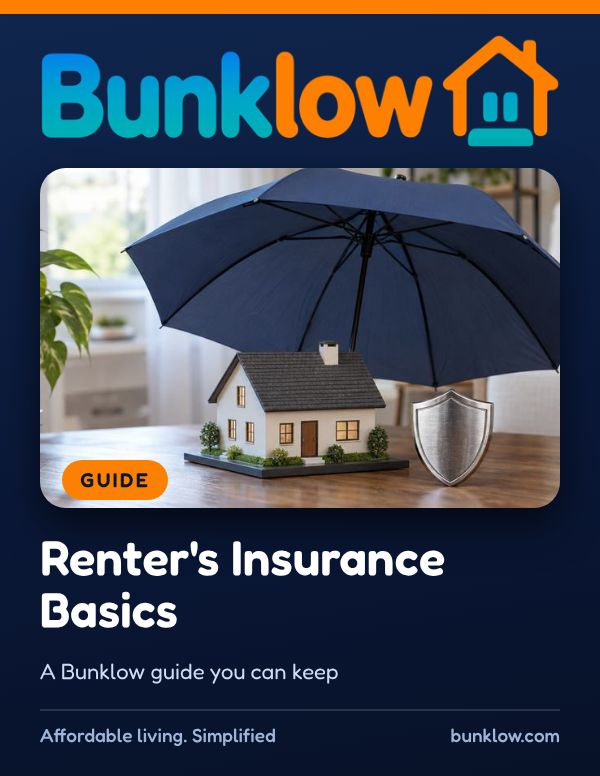
Guide · Renting and leases
Renter's Insurance Basics
A friendly, practical guide to what renter’s insurance is, what it usually covers, and how to choose a policy that fits your life.
Where to start
- Something lost or damaged?
Make sure everyone is safe first. See if something is lost or damaged.
- No policy yet?
Start with before you buy.
- Already covered?
Keep it current with the smart coverage habits.
The short version
Renter’s insurance protects your belongings, your liability and your extra living costs. An owner’s policy usually covers the building, not what is inside it.
Most policies cover personal property against events like fire, smoke and theft, plus personal liability and additional living expenses. Floods and earthquakes usually need separate coverage.
To choose well: compare a few quotes, ask about replacement cost versus actual cash value, pick a comfortable deductible, and mention any valuables.
Make a quick photo or video inventory of your belongings and keep it stored online or away from home.
Rules differ from place to place, so we’d gently encourage a quick look at your local rules. If you ever have questions, we would love to help.
Four simple rules
- 1The building’s policy isn’t yours
An owner’s insurance generally covers the building, not the belongings or liability of the people living inside.
- 2Three parts to know
Most policies include personal property, personal liability, and additional living expenses if the home can’t be lived in.
- 3Read what’s excluded
Floods and earthquakes are usually not covered by a standard policy and may need separate coverage.
- 4Know what you own
A simple photo or video inventory makes choosing coverage, and filing any claim, far easier.
Smart coverage habits
From the guide’s own checklist. Tick each one as you go. Your ticks stay on this device. These are examples; your home may need others.
All done. Ten minutes now can make a claim far easier later.
Before you buy
From the guide’s own checklist. Tick each one as you go. Your ticks stay on this device. These are examples; your home may need others.
All done. You’re ready to compare quotes.
If something is lost or damaged
- Make sure everyone is safe first. Belongings can be replaced, people cannot.
- Let the owner or property manager know right away, and call emergency services if needed.
- If there was a theft, file a police report and keep the report number.
- Take photos and video of the damage before cleaning up, when it is safe to do so.
- Call your insurer to start a claim, and write down the claim number and the name of each person you speak with.
- Keep receipts for temporary housing, meals and repairs, and share them with your insurer.
Write down the claim number, the date, and the name of everyone you talk with. A simple log keeps everything clear and calm.
Guides that go well with this one
How much do you remember?
4 quick questions from this guide, with a one line why for each. Totally optional, no sign in, and your answers are never saved.
Go deeper with The Perfect Move-In Checklist Workbook
Simple, step by step checklists you can write in for moving in: the move in walk, moving day, your first week, utilities, keys and more.
Keep the full guide handy
The PDF has everything: everyday habits, what to do when something goes wrong, common myths, helpful resources and plenty of real-world tips. Print it, save it or share it with anyone who could use it.
Download the PDFTake it with you
- Leases, Rent and Money Checklist PackThe Leases, Rent and Money checklists in one pack, fillable on screen or printable.See it in the shop
More guides
This guide shares general information to help you, and is not legal or insurance advice. Bunklow does not sell insurance or decide claims.