

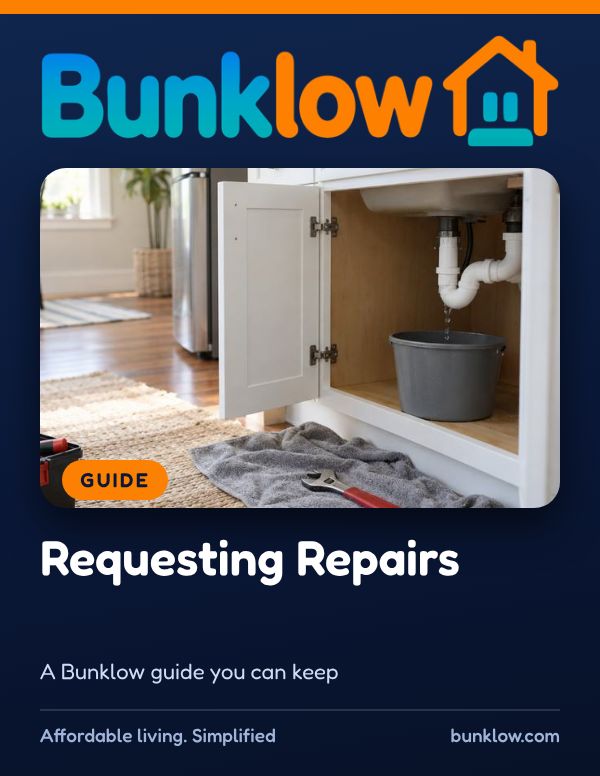
Guide · Renting and leases
Requesting Repairs
A friendly, practical guide to asking for repairs clearly, knowing what is urgent, and following through until the job is done.
Where to start
- Gas smell, fire or a carbon monoxide alarm?
Get everyone out and call 911 from outside. See if it’s an emergency.
- Not sure if it’s urgent?
See emergency or routine.
- Ready to ask for a repair?
Say what, where and when, and add a photo. Use the repair request checklist.
The short version
Requesting repairs well keeps homes safe and small problems small. Share issues early, in writing, with clear photos.
Emergencies, like fire, a gas smell, a carbon monoxide alarm or major flooding, come first. Get to safety and call for help right away.
A great request says what is wrong, where it is and when it started, with a photo, plus the best times for access.
Keep a copy of every request and reply, and follow up kindly if a repair stalls. Let the owner know when it’s fixed.
Repair rules differ from place to place, so we’d gently encourage a quick look at your local rules. If you ever have questions, we would love to help.
Four simple rules
- 1Safety first, always
For fire, a gas smell or a carbon monoxide alarm, leave the home and call 911 from outside before anything else.
- 2Share it early
Small problems reported early are usually quick fixes. Waiting often makes them bigger, costlier and harder.
- 3Put it in writing
A written request, with photos, creates a clear record of what was asked, and when.
- 4Follow up kindly
If a repair stalls, a friendly check-in usually gets it moving again.
Repair request checklist
From the guide’s own checklist. Tick each one as you go. Your ticks stay on this device. These are examples; your home may need others.
All done. One wide photo and one close up tell the whole story.
If it’s an emergency
- If you smell gas, see fire, or a carbon monoxide alarm sounds, get everyone out and call 911 from outside.
- For a major water leak, shut off the water at the fixture valve or the main shutoff if it is safe to do so.
- Keep away from water near electrical outlets, cords or appliances.
- Call the owner or manager’s emergency number right away, then follow up in writing.
- Take photos or video of the problem and any damage, when it is safe to do so.
- Move belongings out of harm’s way and begin drying wet areas. Drying within about 24 to 48 hours helps prevent mold.
Learn where the main water shutoff is on your first day in the home.
Emergency or routine?
These are examples, not a complete list. When in doubt, call.
- Usually emergencies: fire, a gas smell, a sounding carbon monoxide alarm, major leaks or flooding, sewage backups, electrical sparks or burning smells, no heat in freezing weather, and a door or window that won’t lock.
- Usually routine: a dripping faucet, a running toilet, a loose cabinet door or a burned out appliance light. Report them promptly too.
Small leaks rarely fix themselves, so please report them right away.
Guides that go well with this one
Like it on paper?
The printable checklist for this guide is fillable, with a screen version and an ink saver print version. Keep it on your phone or pin it to the fridge.
How much do you remember?
4 quick questions from this guide, with a one line why for each. Totally optional, no sign in, and your answers are never saved.
Go deeper with The Perfect Move-In Checklist Workbook
Simple, step by step checklists you can write in for moving in: the move in walk, moving day, your first week, utilities, keys and more.
Keep the full guide handy
The PDF has everything: everyday habits, what to do when something goes wrong, common myths, helpful resources and plenty of real-world tips. Print it, save it or share it with anyone who could use it.
Download the PDFMore guides


This guide shares general information to help you, and is not legal, medical or safety-code advice. Bunklow does not inspect properties or perform repairs.