

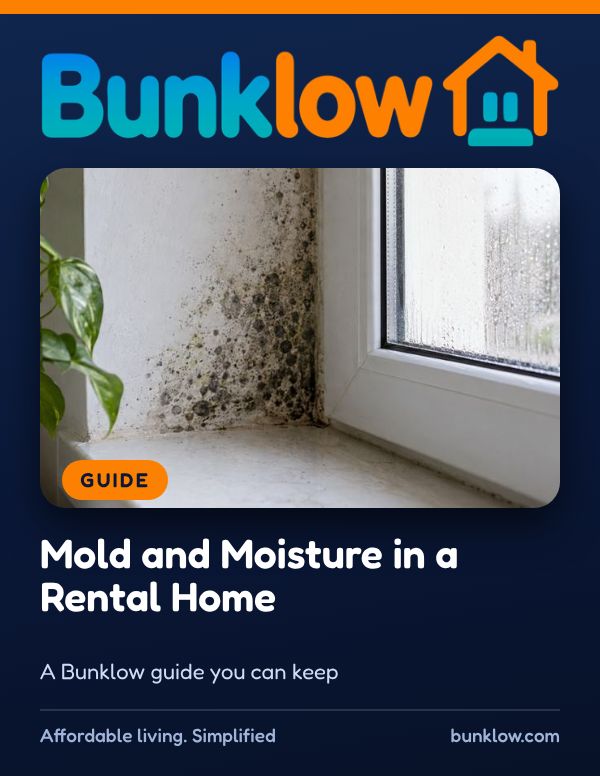
Guide · Safety and emergencies
Mold and Moisture in a Rental Home
A friendly, practical guide for owners and tenants. We put it together because we have seen how much worry mold can cause, and how easily most of it can be prevented.
Where to start
- Found a leak or water?
Stop the water, dry things within a day or two, and report it. See if you find a leak.
- Seeing a mold spot?
Fix the water first. See cleaning a small spot safely and when to call a professional.
- Owner getting a home ready?
See before move in, then walk it together with the moisture walk.
The short version
Mold can feel worrying, but it follows one simple rule: where there is no moisture, there is no mold. When we take care of the water, we take care of the mold.
Tenants: please run the bathroom fan during and after showers, use the range hood while cooking, wipe window condensation, keep the shower curtain inside the tub, and let your owner know in writing, with a photo, whenever you notice a leak, stain or musty smell.
Owners: before move-in, clean the gutters, check every vent fan, re-caulk tubs and sinks, and fix and dry any leaks. Then walk these areas together with your tenant at move-in.
If mold appears, please fix the water first. Small spots (under about 10 square feet) can usually be scrubbed with detergent and water and dried. For larger areas, or mold in walls or ducts, we recommend a professional.
Please don't point a fan at mold, paint over it, or mix bleach with other cleaners.
Every state handles this a little differently, so we'd gently encourage a quick look at your local rules. If you ever have questions, we would love to help.
Four simple rules
- 1Moisture is always the cause
Mold spores are everywhere, indoors and out. They only grow where something stays wet, so finding the water is the first and most important step.
- 2Dry things within a day or two
Wet drywall, carpet or wood that is dried within 24 to 48 hours usually will not grow mold. After that, the chances go up quickly.
- 3Keep the air comfortably dry
Indoor humidity between 30 and 50 percent is ideal, and below 60 percent at most. An inexpensive humidity gauge makes this easy to check.
- 4Let each other know in writing
A short written note with a photo, sent the same day, protects everyone. It helps the tenant, and it gives the owner what they need to fix things quickly.
Everyday habits that keep a home dry
From the guide’s own habits. Tick each one as you go. Your ticks stay on this device. These are examples; your home may need others.
All done. Your home has a steady plan to stay dry.
If you find a leak
- Keep everyone away from water near electricity first.
- Stop the water at the nearest valve or the main shutoff.
- Mop and towel up water, and run fans and a dehumidifier.
- Move belongings off wet floors and out of wet cabinets.
- Photograph everything and report it urgently, by phone and in writing.
- Soaked carpet and pad, wet drywall, wet insulation and anything still damp after 48 hours usually need professional drying. Water from toilets, sewers or floods needs professional cleanup.
If water is coming through a ceiling or a ceiling is sagging, stay out from under it, turn off power to that area only from a dry spot and call right away.
Cleaning a small mold spot safely
From the guide’s own steps for a small spot on a hard surface. Tick each one as you go. Your ticks stay on this device. These are examples; your home may need others.
All done. Keep an eye on the spot, and report it if it comes back.
What not to clean yourself
- Areas larger than about 10 square feet.
- Mold in heating and cooling ducts.
- Mold after sewage or floodwater.
- Mold on porous materials like ceiling tiles, insulation or carpet, which often need replacing.
- Anything high enough to need a ladder.
Bleach isn’t required for most mold cleanup. If you choose to use it, follow the label, ventilate well and never mix it with ammonia or other cleaners. If anyone is exposed, Poison Control can help at 1 800 222 1222.
A few things to avoid
- Please don’t point a fan at mold.
- Please don’t paint over mold. It grows back through the paint. Clean, dry and fix the moisture first.
- Please don’t mix bleach with other cleaners.
When you see mold, ask first: where is the water coming from?
The moisture walk at move in and move out
From the guide’s move in and move out check. Tick each one as you go. Your ticks stay on this device. These are examples; your home may need others.
All done. Your moisture walk is on record.
Do the move in moisture walk before your furniture arrives, when walls and closets are easy to see. Bunklow Walk makes the move in report easy. See Bunklow Walk.
Before move in
From the guide’s list for owners. Tick each one as you go. Your ticks stay on this device. These are examples; your home may need others.
All done. The home starts out dry.
Raising a concern without blame
Mold isn’t a cleaning failure or a sign that someone is careless. It’s what happens when water stays where it shouldn’t. Here is the guide’s own wording, word for word:
Raising a moisture concern. “Hi, I’ve noticed some mold spots in the bedroom corner that keep coming back, even after cleaning. I’m running the fan and keeping humidity down, so I think there may be a moisture source we can’t see. Could we look at it together? Thank you.”
Reassuring a worried resident. “Thank you for telling me about the mold. You did exactly the right thing. Mold almost always comes from a moisture problem in the building, and we’ll find it and fix it together.”
Guides that go well with this one
Helpful resources
U.S. Environmental Protection Agency: Mold. Who handles what is shaped by the lease and by the rules where the home is. Owners usually fix leaks and building problems, and residents control everyday moisture and report promptly. Every state handles this a little differently, so we’d gently encourage a quick look at the rules where your home is. A local landlord or tenant association or an attorney in your area can help.
Like it on paper?
The printable checklist for this guide is fillable, with a screen version and an ink saver print version. Keep it on your phone or pin it to the fridge.
How much do you remember?
4 quick questions from this guide, with a one line why for each. Totally optional, no sign in, and your answers are never saved.
Go deeper with The Perfect Seasonal Home Care Checklist Workbook
Simple, step by step checklists you can write in, one topic at a time, to help any home stay warm, safe and dry through every season.
Keep the full guide handy
The PDF has everything: everyday habits, what to do when something goes wrong, common myths, helpful resources and plenty of real-world tips. Print it, save it or share it with anyone who could use it.
Download the PDFTake it with you
- Healthy Home Checklist PackThe Healthy Home checklists in one pack, fillable on screen or printable.See it in the shop
More guides


This guide shares general information to help you, and is not legal or medical advice. Bunklow does not inspect properties or decide deposits.