

Guide · Home care
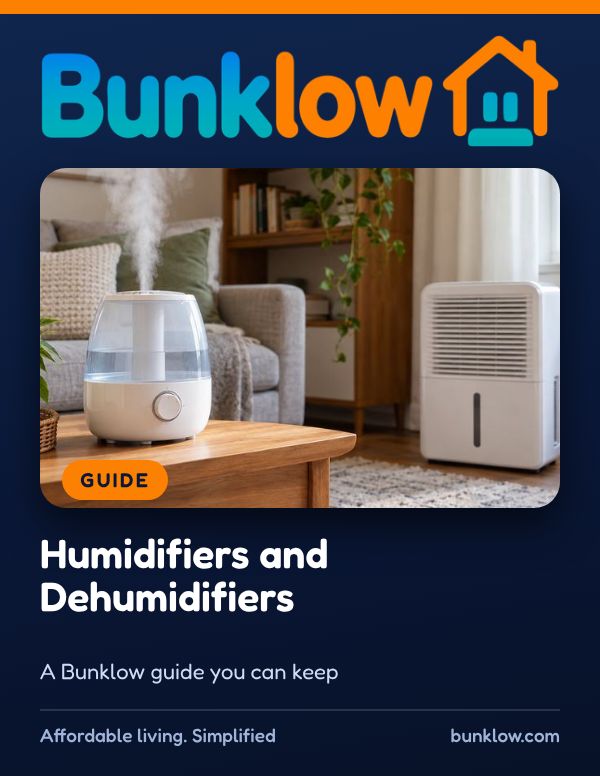
Humidifiers and Dehumidifiers
A friendly, practical guide to keeping indoor humidity comfortable, from knowing when to use a humidifier or dehumidifier to cleaning them so they help instead of harm.
Where to start
- Seeing mold or heavy condensation?
Take a breath. See what to do first.
- Finding the healthy middle?
Tick through the humidity checklist.
- Getting a home ready?
The short version
The moisture in the air shapes how a home feels and holds up. Too dry or too damp both cause trouble.
The EPA suggests keeping indoor humidity below 60 percent, ideally between 30 and 50 percent. A small meter helps.
Run bathroom and kitchen fans, use a dehumidifier in damp spaces, and a humidifier only when the air is very dry.
Clean humidifiers and dehumidifiers regularly, and share lasting condensation, musty smells or mold spots in writing.
Rules about mold and moisture differ from place to place, so we’d gently encourage a quick look at the rules where your home is. If you ever have questions, we would love to help.
Four simple rules
- 1Aim for the middle
The EPA suggests keeping indoor humidity below 60 percent, ideally between 30 and 50 percent.
- 2Measure it
An inexpensive humidity meter takes the guesswork out of comfort.
- 3Clean the machine
Humidifiers and dehumidifiers need regular cleaning so they don’t grow mold or bacteria.
- 4Share moisture signs
Report condensation that won’t clear, musty smells or mold spots, in writing.
Humidity checklist
From the guide’s own checklist. Tick each one as you go. Your ticks stay on this device. These are examples; your home may need others.
All done. Your home is in the healthy middle.
Aim for the middle
The EPA suggests keeping indoor humidity below 60 percent, ideally between 30 and 50 percent. An inexpensive humidity meter, called a hygrometer, takes the guesswork out of comfort.
Use a dehumidifier in damp spaces, like basements or laundry rooms, when humidity stays high. Use a humidifier only in very dry weather, when the air feels uncomfortable, and follow the maker’s instructions.
Drying clothes on racks indoors adds a lot of moisture. Open a window, run a fan, or use the dryer if you can.
A quick humidity check: humidity between about 30 and 50 percent, fans working, no lasting condensation, no musty smells, and no new spots on walls or ceilings.
If you see mold or heavy condensation
- Take a breath. Condensation and small mold spots are common, and they can be handled.
- Turn off any humidifier and open a window or run a fan to dry the air.
- Wipe condensation from windows and sills with a dry cloth.
- Please don’t scrub or disturb a large patch of mold yourself. Keep the area closed off if you can.
- Take photos, with the date and time, and note where you see moisture.
- Share it in writing right away. You did exactly the right thing.
Morning window condensation is a quick clue. If the windows are dripping every day, the air is too damp, so turn off the humidifier, run the fans and let the home dry out.
A few things to avoid
- Please don’t let water sit in a humidifier tank for days between uses.
- Please don’t run a humidifier so much that windows fog or walls feel damp.
- Please don’t place a dehumidifier where its bucket could overflow onto floors or carpet.
- Please don’t paint over or hide mold. The moisture source needs to be found and fixed first.
Before someone moves in
From the guide’s list for owners. Tick each one as you go. Your ticks stay on this device. These are examples; your home may need others.
All done. The home is ready to stay comfortable and dry.
When a moisture concern is shared
- Thank the person for sharing it, and look at the moisture or mold promptly.
- Find and fix the source, whether it is a leak, poor venting or high humidity.
- Have larger mold areas cleaned up by a qualified professional, following EPA guidance.
- Add or repair fans, vents or dehumidifiers if the space needs them.
- Write down what was reported, what was done and when, and follow up kindly to make sure all is well.
For more, see U.S. EPA: The Inside Story, A Guide to Indoor Air Quality and ENERGY STAR: Dehumidifiers.
Guides that go well with this one
Like it on paper?
The printable checklist for this guide is fillable, with a screen version and an ink saver print version. Keep it on your phone or pin it to the fridge.
How much do you remember?
4 quick questions from this guide, with a one line why for each. Totally optional, no sign in, and your answers are never saved.
Go deeper with The Perfect Seasonal Home Care Checklist Workbook
Simple, step by step checklists you can write in, one topic at a time, to help any home stay warm, safe and dry through every season.
Keep the full guide handy
The PDF has everything: everyday habits, what to do when something goes wrong, common myths, helpful resources and plenty of real-world tips. Print it, save it or share it with anyone who could use it.
Download the PDFTake it with you
- Bunklow Home Guide 011: Whole-House Central Furnace Humidifiers and Evaporative Pad MaintenanceA printable guide to whole-house central furnace humidifiers and evaporative pad maintenance, in plain steps.See it in the shop
- Bunklow Home Guide 012: Portable Room Dehumidifiers, Continuous Gravity Drains, and Target Humidity ControlA printable guide to portable room dehumidifiers, continuous gravity drains, and target humidity control, in plain steps.See it in the shop
- Healthy Home Checklist PackThe Healthy Home checklists in one pack, fillable on screen or printable.See it in the shop
More guides


This guide shares general information to help you, and is not legal, medical or mold remediation advice. Please follow the maker’s instructions for your humidifier or dehumidifier. Bunklow does not inspect homes or test for mold.