

Guide · Home care
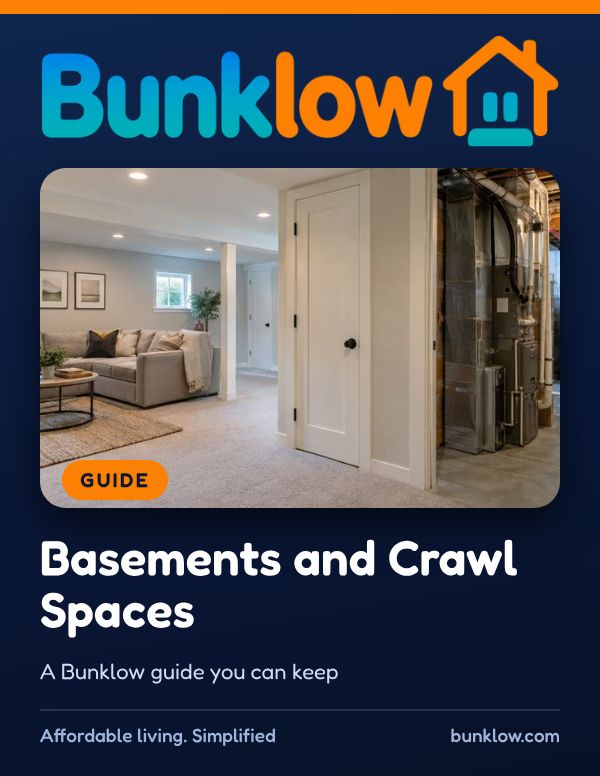
Basements and Crawl Spaces
A friendly, practical guide to keeping the lowest parts of the home dry, safe and healthy, from sump pumps to storage to flooding signs.
Where to start
- Water is coming in right now?
Stay out of standing water if it could reach outlets, cords or appliances. See if water comes in.
- Rain on the way?
Test the sump pump before the rainy season, and take a walk through with a flashlight after the next heavy rain. The sump pump test takes a bucket of water.
- Just want good habits?
Start with the checklist. Moisture control comes first.
The short version
Basements and crawl spaces quietly affect the air and the health of the whole home. A little attention keeps them dry and safe.
Moisture control comes first. Keep gutters and downspouts flowing away from the foundation, keep humidity generally below 60 percent, and dry wet areas within about 24 to 48 hours.
Store belongings on shelves or in lidded plastic bins. Watch for musty smells, damp walls, white chalky lines and a sump pump that runs constantly or not at all.
If water comes in, stay out of standing water that could reach electricity, take photos, and share it right away so it can be dried quickly.
Rules about moisture and repairs differ from place to place, so we’d gently encourage a quick look at the rules where your home is. If you ever have questions, we would love to help.
Four simple rules
- 1Moisture control comes first
The EPA puts it simply: the key to mold control is moisture control. Find the water source, and dry things quickly.
- 2Keep things off the floor
Store belongings on shelves or in plastic bins with lids, so a little water never becomes a big loss.
- 3Water and electricity don’t mix
Never step into standing water if it could reach outlets, cords or appliances. Stay out and get help.
- 4Share signs early
Musty smells, damp walls or a sump pump that runs constantly are worth sharing before they grow.
Your basement and crawl space checklist
From the guide’s own checklist. Tick each one as you go. These are examples; your home may need others.
All done. The lowest level of your home thanks you.
How to test a sump pump
- Find the pit in the floor where water from around the foundation collects.
- Slowly pour a bucket of water into the pit.
- Watch the pump turn on, push the water out and shut off.
- Make sure the discharge line outside is clear and carries the water well away from the house.
A pump can fail quietly, so the best time to test it is before the rainy season.
Is it coming through the wall, or from the air?
- Tape a piece of plastic wrap tightly to the wall.
- Leave it for a day or two.
- Moisture behind the plastic usually means water is coming through the wall.
- Moisture on the front usually means the air is humid.
That white, powdery deposit on concrete walls is called efflorescence. It is a good clue to share.
If water comes in
- Take a breath, and stay out of standing water if it could reach outlets, cords or appliances.
- If it is safe to do so from a dry spot, turn off power to the area. If you are unsure, stay out and call for help.
- Move people and pets away, and keep children out of the area.
- Take photos or a short video of the water, where it seems to be coming from and anything it has reached.
- If it is safe, check whether the sump pump is running and whether a pipe, the water heater or the washer is leaking.
- Share what happened right away, in writing, so it can be dried and repaired quickly.
You did exactly the right thing.
Guides that go well with this one
How much do you remember?
4 quick questions from this guide, with a one line why for each. Totally optional, no sign in, and your answers are never saved.
Go deeper with The Perfect Seasonal Home Care Checklist Workbook
Simple, step by step checklists you can write in, one topic at a time, to help any home stay warm, safe and dry through every season.
Keep the full guide handy
The PDF has everything: everyday habits, what to do when something goes wrong, common myths, helpful resources and plenty of real-world tips. Print it, save it or share it with anyone who could use it.
Download the PDFMore guides

This guide shares general information to help you, and is not legal, medical or safety-code advice. For structural, electrical or mold concerns, please use a qualified professional. Bunklow does not inspect properties or make repairs.