

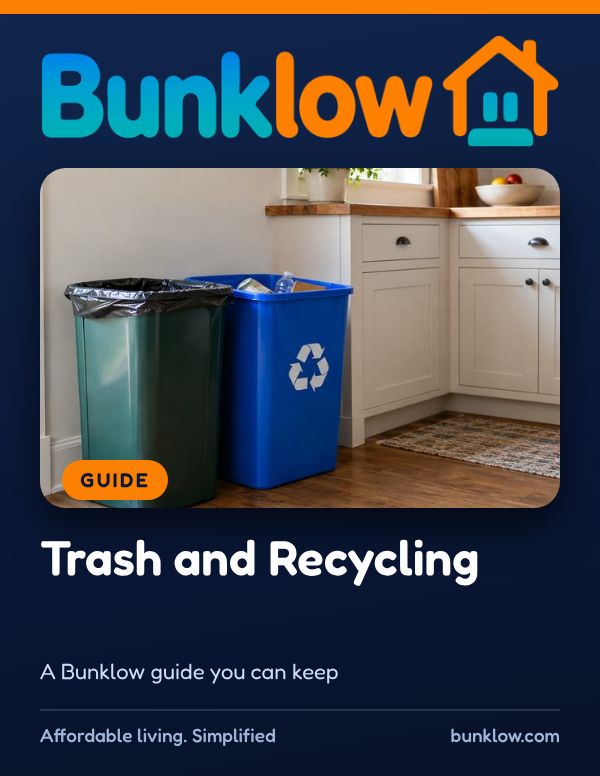
Guide · Home care
Trash and Recycling
A friendly, practical guide to trash day, recycling basics, bulky items, hazardous waste and keeping shared bins clean and pest-free.
Where to start
- Just moved in?
Ask three quick questions: what day is pickup, where do the bins go, and what does the recycling cart take?
- Bins overflowing or pests showing up?
Take a breath. See if bins overflow or pests appear.
- Not sure where something goes?
See what goes where, then check your local list.
The short version
A simple trash routine keeps bins clean, pests away and neighbors happy.
Know your pickup day, tie every bag, keep lids closed, and bring bins back promptly.
Recycling rules differ from place to place. Rinse containers, flatten boxes, keep plastic bags out, and check the local list when unsure.
Batteries, paint, chemicals, electronics and medicines usually need special drop-off, and bulky items often need a scheduled pickup.
Trash rules vary by area, so we’d gently encourage a quick look at your local rules. If you ever have questions, we would love to help.
Four simple rules
- 1Know your trash day
Find out the pickup day, what time bins need to be out, and where they go, and set a weekly reminder.
- 2Bag it, tie it, close it
Tied bags and closed lids keep odors in, pests out and trash from blowing around.
- 3When in doubt, check first
Recycling rules differ from place to place. A quick look at the local list keeps carts from being rejected.
- 4Some things never go in the bin
Batteries, paint, chemicals, electronics and medicines usually need special drop-off, not the trash.
Trash and recycling checklist
From the guide’s own checklist. Tick each one as you go. Your ticks stay on this device. These are examples; your home may need others.
All done. Trash day just got a lot easier.
If bins overflow or pests appear
- Take a breath. Missed pickups and full bins happen to everyone.
- Bag and tie any loose trash, and close lids as well as you can to keep animals out.
- If a pickup was missed, check for a holiday schedule change or a notice left on the bin.
- If you see signs of pests, like droppings or chewed bags, clean the area and keep food waste sealed.
- Share it in writing, with a photo, so it can be fixed quickly.
- For ongoing overflow, ask together about a larger bin or an extra pickup day.
You did exactly the right thing.
What goes where
- Your local list always comes first. Many curbside programs take clean paper, flattened cardboard, metal cans, and many plastic bottles and jars. Glass varies by area.
- Recyclables should be empty, clean and dry. Bags, cords, hoses, food soiled items and broken glass usually cause problems at the recycling plant.
- Batteries, paint, chemicals, electronics and medicines usually need a special drop off, not the trash. Look up your local household hazardous waste drop off.
- Many areas offer scheduled bulky item pickup or drop off days for couches and mattresses.
When in doubt, check first.
Guides that go well with this one
How much do you remember?
4 quick questions from this guide, with a one line why for each. Totally optional, no sign in, and your answers are never saved.
Go deeper with The Perfect Move-In Checklist Workbook
Simple, step by step checklists you can write in for moving in: the move in walk, moving day, your first week, utilities, keys and more.
Keep the full guide handy
The PDF has everything: everyday habits, what to do when something goes wrong, common myths, helpful resources and plenty of real-world tips. Print it, save it or share it with anyone who could use it.
Download the PDFMore guides
This guide shares general information to help you, and is not legal or safety-code advice. Bunklow does not inspect properties.