

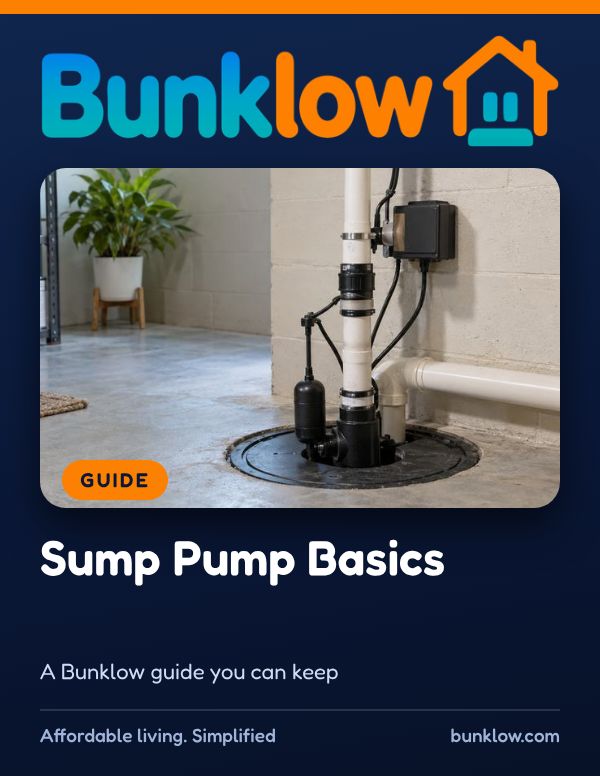
Guide · Home care
Sump Pump Basics
A friendly, practical guide to what a sump pump does, how to test it, backup power, discharge lines and alarms, and what to do if it ever stops working.
Where to start
- Water rising right now?
Take a breath, and stay out of water near electricity. See if water starts rising.
- Just moved in?
Find the sump pit, the pump, its outlet and the breaker that powers it. Then label the plug.
- Storm on the way?
Try the bucket test if the owner allows, and make sure the outside discharge line is clear.
The short version
A sump pump can be the only thing between a heavy rain and a flooded basement.
Know where it is, keep it plugged in, and keep the outside discharge line clear.
Test it every few months if the owner allows, and listen for it running during storms.
If water rises, stay away from water near electricity, check the power, and call the owner right away.
Rules about water damage differ from place to place, so we’d gently encourage a quick look at the rules where your home is. If you ever have questions, we would love to help.
Four simple rules
- 1Know where it is
Find the sump pit and pump, its outlet, and the breaker that powers it.
- 2Keep it plugged in
The pump only works with power. Never unplug it to use the outlet.
- 3Test it regularly
Test it every few months and before rainy seasons.
- 4Keep water flowing away
The discharge line should carry water well away from the home.
Sump pump checklist
From the guide’s own checklist. Tick each one as you go. Your ticks stay on this device. These are examples; your home may need others.
All done. Your basement is a lot readier for the next storm.
If water starts rising
- Take a breath. Stay out of standing water if outlets, cords or appliances are nearby. Water and electricity together are an emergency.
- If it is safe, check that the pump is plugged in and the breaker hasn’t tripped.
- If the power is out and there is a backup pump or battery, make sure it is running.
- Move belongings off the basement floor if you can do it safely.
- Take photos and video of the water and the pump.
- Call the owner right away, and follow up in writing.
You did exactly the right thing.
The bucket test
- Ask the owner first. Only test the pump if they allow it.
- Slowly pour a bucket of water into the pit.
- Watch the float rise, the pump turn on, and the water pump out.
- Check that the pump turns off once the water is gone. A loud thunk when it stops is often normal.
- Outside, make sure the discharge line is clear and water flows well away from the home.
- Share anything unusual in writing, like grinding or rattling, sewer smells, or a pump that runs nonstop in dry weather.
Never reach into the pit or touch the pump while it is plugged in.
For owners: before the rainy season
- Test the pump and float, and clean any debris from the pit.
- Make sure the check valve works and the discharge line is clear and directed away from the foundation.
- Consider a battery backup or water powered backup pump, and a high water alarm.
- Plug the pump straight into a grounded, GFCI protected outlet within reach of its cord, never an extension cord.
- Show residents where the pump is, how it works and who to call.
- Ask your insurance agent whether your policy covers sump pump backup. Many policies need an added endorsement.
Guides that go well with this one
How much do you remember?
4 quick questions from this guide, with a one line why for each. Totally optional, no sign in, and your answers are never saved.
Go deeper with The Perfect Seasonal Home Care Checklist Workbook
Simple, step by step checklists you can write in, one topic at a time, to help any home stay warm, safe and dry through every season.
Keep the full guide handy
The PDF has everything: everyday habits, what to do when something goes wrong, common myths, helpful resources and plenty of real-world tips. Print it, save it or share it with anyone who could use it.
Download the PDFTake it with you
- Plumbing and Water Checklist PackThe Plumbing and Water checklists in one pack, fillable on screen or printable.See it in the shop
More guides

This guide shares general information to help you, and is not legal, plumbing or insurance advice. Please call a qualified professional for repairs. Bunklow does not inspect or repair sump pumps.