

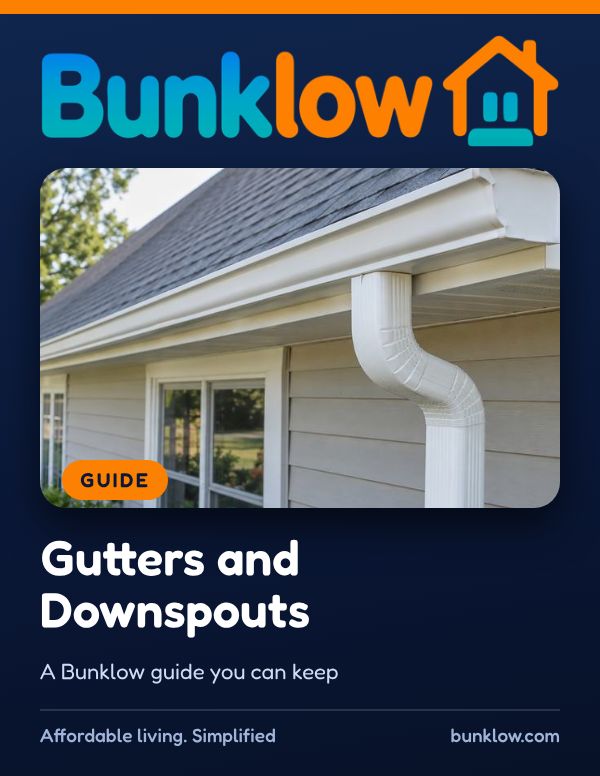
Guide · Home care
Gutters and Downspouts
A friendly, practical guide to keeping rainwater moving off the roof, through the gutters and safely away from the home.
Where to start
- Water coming inside?
Move belongings away, set out towels or a bucket, and share it with photos. See if water is overflowing or pooling.
- Raining right now?
Grab an umbrella and walk around the home once. Then work through the gutters and downspouts checklist.
- Own the home?
The short version
Gutters and downspouts carry rainwater off the roof and away from the home. When they clog or come loose, water can end up in basements, walls and siding.
Clean gutters at least in spring and fall, and more often with lots of trees nearby. Flush the downspouts with a hose when you finish.
Every downspout should send water several feet away from the foundation, and the ground should slope gently away from the walls.
Check gutters during a steady rain, stay safe on ladders, never work on a wet or icy roof, and call a pro for high or steep work.
Rules about drainage differ from place to place, so we’d gently encourage a quick look at your local rules. If you ever have questions, we would love to help.
Four simple rules
- 1Clean them at least twice a year
Spring and fall are the usual times. Homes with lots of trees nearby may need it more often.
- 2Move water away from the home
Every downspout should carry water several feet away from the foundation, not let it pool beside the walls.
- 3Watch them in the rain
A few minutes during a good rain shows overflows, drips and puddles that are hard to spot on a dry day.
- 4Safety comes before speed
Use a sturdy ladder on firm ground, never work on a wet or icy roof, and call a pro for anything high or steep.
Gutters and downspouts checklist
From the guide’s own checklist. Tick each one as you go. Your ticks stay on this device. These are examples; your home may need others.
All done. Your gutters are quietly protecting the whole home, rain or shine.
Where the water should go
- Rainwater should flow from the roof into clean gutters, down the downspouts and out through an extension or splash block several feet from the home.
- The ground around the foundation should slope gently away from the walls, so water soaks into the yard instead of collecting against the house.
- Gutters should tilt slightly toward the downspouts. If water stands in one section after rain, a hanger may need adjusting.
The best time to check gutters is during a steady rain. Five minutes tells you more than an hour on a dry day.
If water is overflowing or pooling
- Stay safe first. Watch from the ground, and stay away from any gutter that looks loose or is hanging.
- Note where the water is overflowing, dripping or pooling, and take a few photos or a short video.
- Check whether a downspout extension or splash block has come loose, and gently put it back if you can reach it from the ground.
- If water is coming inside, move belongings away, wipe up what you can and set out towels or a bucket.
- Share what you saw in writing, with photos, as soon as you can so it can be looked at quickly.
- After it is fixed, keep an eye on the spot during the next good rain to make sure the water is going where it should.
Please never feel bad about sharing a gutter problem. Catching it early is the whole point.
A few things to avoid
- Please don’t climb onto the roof or use a ladder to reach the gutters. That work is for the owner or a qualified professional.
- Please don’t hang heavy items, lights or plants from gutters unless they were made for it.
- Please don’t remove downspout extensions to make mowing easier and then forget to put them back.
- Please don’t ignore a gutter pulling away from the house. It can fall, and it usually means water has been getting in.
For owners: getting it ready
From the guide’s owner list. Your ticks stay on this device. These are examples; your home may need others.
All done. The home is ready for the next good rain.
Guides that go well with this one
Like it on paper?
The printable checklist for this guide is fillable, with a screen version and an ink saver print version. Keep it on your phone or pin it to the fridge.
How much do you remember?
4 quick questions from this guide, with a one line why for each. Totally optional, no sign in, and your answers are never saved.
Go deeper with The Perfect Yard
The outside of a home is where the question “whose job is this?” comes up most often. The Perfect Yard is a calm, plain guide for owners and residents who share the care of a yard, deck and outdoor spaces, one part of the yard at a time.
Keep the full guide handy
The PDF has everything: everyday habits, what to do when something goes wrong, common myths, helpful resources and plenty of real-world tips. Print it, save it or share it with anyone who could use it.
Download the PDFTake it with you
- Bunklow Home Guide 084: Visual Gutter Debris Inspections from Ground Level and Pitch CheckA printable guide to visual gutter debris inspections from ground level and pitch check, in plain steps.See it in the shop
- Bunklow Home Guide 085: Gutter Downspout Splash Block Alignment and 5-Foot Discharge ExtensionsA printable guide to gutter downspout splash block alignment and 5-foot discharge extensions, in plain steps.See it in the shop
- Outdoors and Yard Checklist PackThe Outdoors and Yard checklists in one pack, fillable on screen or printable.See it in the shop
More guides



This guide shares general information to help you, and is not legal or safety-code advice. Bunklow does not inspect properties.