

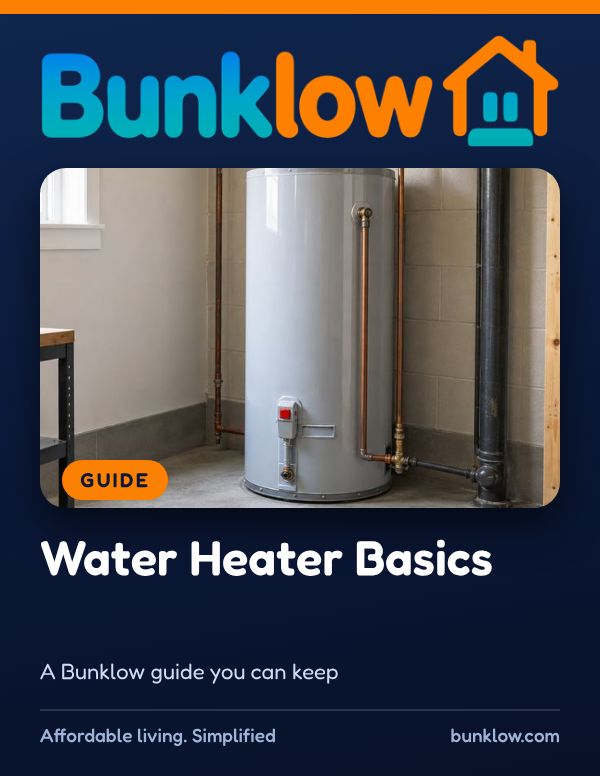
Guide · Home care
Water Heater Basics
A friendly, practical guide to safe temperatures, small leaks, the relief valve, flushing, and knowing when a water heater needs help.
Where to start
- Water heater leaking?
Take a breath. See if the water heater leaks.
- Smell gas?
Leave the home right away and call 911 or the gas utility from outside.
- Just getting to know it?
Work through the water heater checklist.
The short version
A water heater needs very little attention, but a few simple habits keep everyone safe from scalds, leaks and cold surprises.
The U.S. CPSC recommends setting water heaters to about 120°F. Keep the area clear, and never block the pressure relief valve.
Know where the cold-water shut-off is, and how to turn off the breaker or gas control, following the label on the unit.
Flush the tank as the manufacturer recommends. Rust, rumbling, leaks or short hot water are signs to call a professional.
Rules about installation and safety differ from place to place, so we’d gently encourage a quick look at your local rules. We would love to help.
Four simple rules
- 1About 120°F is a safe setting
The U.S. CPSC recommends about 120°F to help prevent scalds. It also saves energy.
- 2Keep the area clear
Keep stored items, and anything that can burn, well away from the water heater, especially a gas unit.
- 3Never block the relief valve
The pressure relief valve and its pipe are safety parts. They should never be capped, plugged or removed.
- 4Small leaks deserve quick attention
A drip or puddle near the tank is worth sharing right away, before it becomes a flood.
Water heater checklist
From the guide’s own checklist. Tick each one as you go. Your ticks stay on this device. These are examples; your home may need others.
All done. Plenty of hot water, and peace of mind.
If the water heater leaks
- If you smell gas, leave the home right away and call 911 or the gas utility from outside. This is an emergency.
- For a leak, stay calm, and keep away from any electrical outlets or cords near the water.
- If it is safe, close the cold water shutoff valve on the pipe going into the top of the water heater.
- If it is safe, turn off the power at the breaker for an electric unit, or set a gas unit’s control to off or pilot, following the label on the unit.
- Move belongings away, wipe up water, and take a few photos of the tank and the floor.
- Share what happened right away so a professional can take a look.
You did exactly the right thing.
Guides that go well with this one
How much do you remember?
4 quick questions from this guide, with a one line why for each. Totally optional, no sign in, and your answers are never saved.
Go deeper with The Perfect Efficient Home
A plain, honest guide for residents and owners who want to waste less energy and water and keep bills easier to live with, without giving up comfort.
Keep the full guide handy
The PDF has everything: everyday habits, what to do when something goes wrong, common myths, helpful resources and plenty of real-world tips. Print it, save it or share it with anyone who could use it.
Download the PDFTake it with you
- Bunklow Home Guide 035: Water Heater Temperature and Pressure (T&P) Relief Valve Safety ChecksA printable guide to water heater temperature and pressure (t&p) relief valve safety checks, in plain steps.See it in the shop
- Bunklow Home Guide 036: Water Heater Sediment Flushing and Tank Bottom DrainageA printable Bunklow guide to water heater sediment flushing and tank bottom drainage: plain steps, how often to check, and when to call a pro.See it in the shop
- Plumbing and Water Checklist PackThe Plumbing and Water checklists in one pack, fillable on screen or printable.See it in the shop
More guides

This guide shares general information to help you, and is not legal, medical or safety-code advice. Bunklow does not inspect properties.