

Guide · Home care
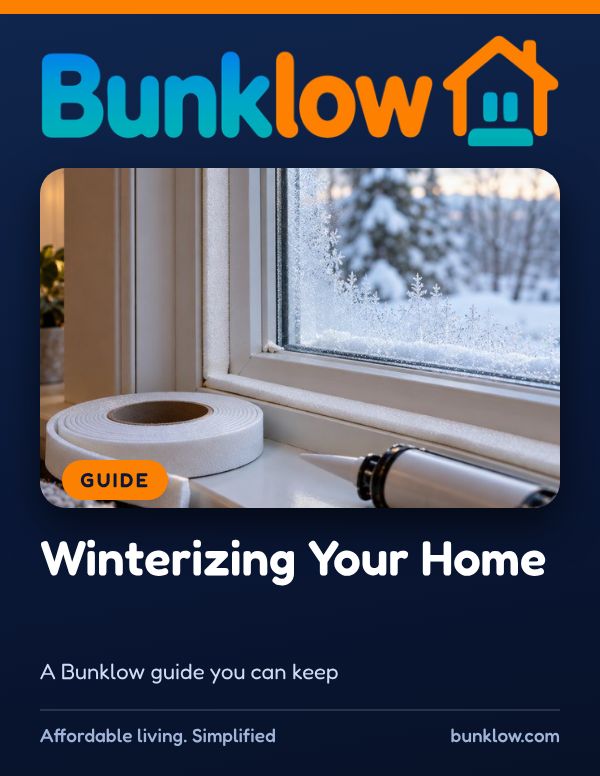
Winterizing Your Home
A friendly, practical guide to getting a home ready for cold weather, from hoses and drafts to safe heat, ice and snow.
Where to start
- First freeze on the way?
Bring in the hoses and work through the winterizing checklist.
- Heat or power out right now?
Take a breath. See if the heat or power goes out.
- Building a winter kit?
Tick through the simple winter kit.
The short version
Winterizing a home means a few simple steps before the first freeze so everyone stays warm and safe until spring.
Disconnect hoses, drain outdoor water, seal drafts, service the heat, and test smoke and carbon monoxide alarms.
Heat safely: keep space heaters three feet from anything that can burn, and never use an oven, stove, grill or indoor generator for heat.
Clear snow early and often, treat icy steps, keep outdoor vents clear, and keep a simple kit ready for storms and outages.
Rules about heat and snow removal differ from place to place, so we’d gently encourage a quick look at your local rules. We would love to help.
Four simple rules
- 1Start before the first freeze
Fall is the time to drain outdoor water, service the heat and seal drafts, while the weather is still kind.
- 2Heat the home safely
Keep space heaters at least three feet from anything that can burn, and never use an oven, stove or grill for heat.
- 3Keep walkways safe
Clear snow early and often, and treat icy steps and paths so everyone can come and go safely.
- 4Be ready for an outage
Keep a simple kit with flashlights, batteries, water, food, medicines and warm blankets for a storm or power outage.
Winterizing checklist
From the guide’s own checklist. Tick each one as you go. Your ticks stay on this device. These are examples; your home may need others.
All done. Your home is ready for a calm, warm winter.
A simple winter kit
From the guide. Keep each person’s needs in mind, including medicines. These are examples; your home may need others.
All done. You are ready if the power goes out.
If the heat or power goes out right now
- Take a breath. If a carbon monoxide alarm sounds or you smell gas, leave the home right away and call 911 or the gas utility from outside.
- If the heat stops, check the thermostat settings and batteries, then share the problem right away, and mention anyone in the home who is very young, older or unwell.
- If the power is out, use flashlights rather than candles. A closed refrigerator keeps food cold for about four hours.
- Keep warm with layers and blankets, and close off rooms you aren’t using.
- If the home gets too cold to stay in safely, go to a friend or family member’s home or a local warming center.
- Call the owner right away, and follow up in writing.
You did exactly the right thing.
Guides that go well with this one
How much do you remember?
4 quick questions from this guide, with a one line why for each. Totally optional, no sign in, and your answers are never saved.
Go deeper with The Perfect Seasonal Home Care Checklist Workbook
Simple, step by step checklists you can write in, one topic at a time, to help any home stay warm, safe and dry through every season.
Keep the full guide handy
The PDF has everything: everyday habits, what to do when something goes wrong, common myths, helpful resources and plenty of real-world tips. Print it, save it or share it with anyone who could use it.
Download the PDFTake it with you
- Bunklow Home Guide 022: Cold-Weather Power Outage Thermal Envelope ManagementA printable Bunklow guide to cold-weather power outage thermal envelope management: plain steps, how often to check, and when to call a pro.See it in the shop
- Bunklow Home Guide 081: Exterior Hose Bib Isolation, Water Line Draining, and Foam Bonnet ShellsA printable guide to exterior hose bib isolation, water line draining, and foam bonnet shells, in plain steps.See it in the shop
- The Perfect Seasonal Home Care Checklist WorkbookA fillable workbook with a screen version and an ink saver print version.See it in the shop
More guides
This guide shares general information to help you, and is not legal, medical or safety-code advice. Bunklow does not inspect properties.