

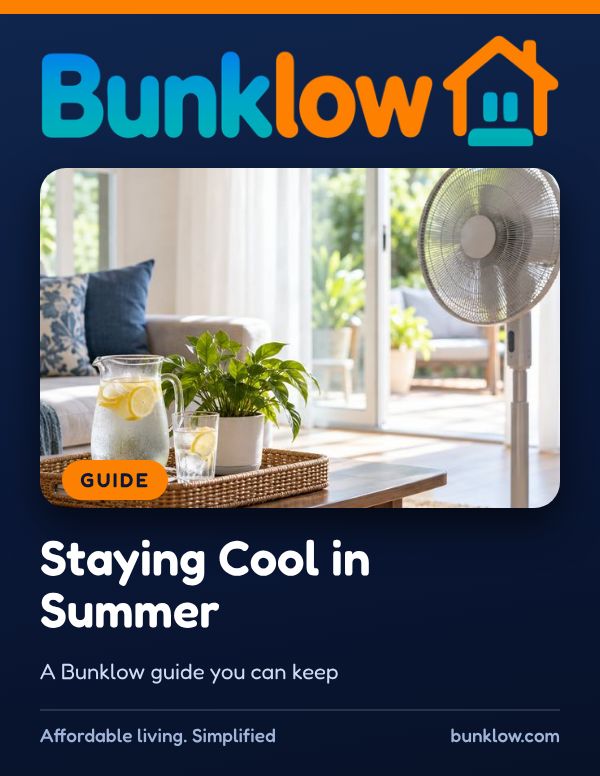
Guide · Home care
Staying Cool in Summer
A friendly, practical guide to keeping the home comfortable, the air conditioning happy, and everyone safe when the heat arrives.
Where to start
- Someone unwell in the heat?
Hot red skin, confusion or fainting can be heat stroke. Call 911. See signs heat is becoming a danger.
- Cooling stopped?
Check the simple things first. See if the cooling stops working.
- Heat wave on the way?
Close sunny blinds in the morning, check the filter, and work through the staying cool checklist.
The short version
Staying cool in summer is about comfort and health, and a few simple habits keep the home cooler and the air conditioning working well.
Close blinds on sunny windows during the day, keep vents clear, set the thermostat to a steady, comfortable temperature, and check the filter often.
Fans help people feel cooler, but in serious heat they aren’t enough on their own. Plug window units directly into the wall, never an extension cord.
If cooling stops, check the thermostat, filter and breaker, then share it right away. If anyone shows signs of heat stroke, call 911.
Rules about cooling vary from place to place, so we’d gently encourage a quick look at the rules where your home is. If you ever have questions, we would love to help.
Four simple rules
- 1Keep the heat out first
Close blinds and curtains on sunny windows during the day. Blocking the sun is the easiest cooling there is.
- 2Help the AC breathe
A clean filter and clear space around the equipment let the air conditioning cool more with less effort.
- 3Fans cool people, not rooms
Fans help you feel cooler, but in serious heat they are not enough on their own. Turn them off in empty rooms.
- 4Share cooling problems early
If the home isn’t cooling, please share it right away, in writing. In a heat wave, early is everything.
Staying cool checklist
From the guide’s own checklist. Tick each one as you go. Your ticks stay on this device. These are examples; your home may need others.
All done. You are ready for the hottest days.
If the cooling stops working
- Check the simple things first: the thermostat is set to cool, the setting is below the room temperature, and the batteries are fresh.
- Look at the filter. A very dirty filter can slow or stop cooling.
- Check the breaker panel for a tripped breaker. Reset it once, and if it trips again, leave it off and share it.
- If you see ice on the indoor lines or coil, turn the cooling off and let the fan run so it can thaw.
- Share the problem right away, in writing, with what you noticed and any photos.
- While you wait, keep the blinds closed, use fans, drink water, and head to a cooler place like a library or cooling center if the home gets too hot.
Hold the filter up to a light. If you can’t see through it, it is time for a fresh one.
Signs heat is becoming a danger
These are common signs, not a complete list.
Heat exhaustion can look like heavy sweating, paleness, cramps, tiredness, dizziness, headache or nausea. Move to a cooler place, loosen clothing and sip water. If symptoms get worse or last more than an hour, get medical help.
Heat stroke can look like a very high body temperature, hot red skin, confusion or fainting. This is an emergency. Call 911 right away and help cool the person while you wait.
Older adults, young children, people with health conditions and pets can feel the heat first. A quick check in means a lot.
Guides that go well with this one
How much do you remember?
4 quick questions from this guide, with a one line why for each. Totally optional, no sign in, and your answers are never saved.
Go deeper with The Perfect Efficient Home
A plain, honest guide for residents and owners who want to waste less energy and water and keep bills easier to live with, without giving up comfort.
Keep the full guide handy
The PDF has everything: everyday habits, what to do when something goes wrong, common myths, helpful resources and plenty of real-world tips. Print it, save it or share it with anyone who could use it.
Download the PDFTake it with you
- The Perfect Seasonal Home Care Checklist WorkbookA fillable workbook with a screen version and an ink saver print version.See it in the shop
More guides
This guide shares general information to help you, and is not legal or medical advice. Bunklow does not inspect properties.