

Guide · Home care
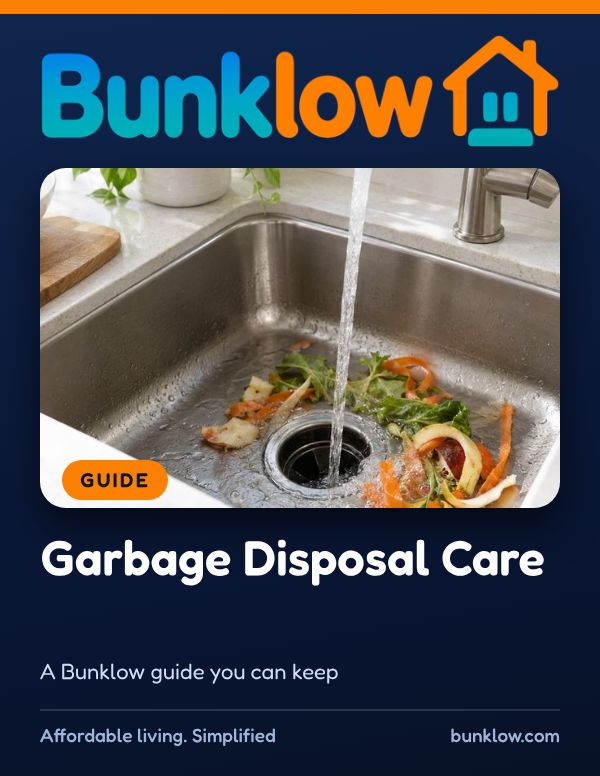
Garbage Disposal Care
A friendly, practical guide to using a garbage disposal safely, keeping it running smoothly, and handling a hum or a jam without worry.
Where to start
- It hums but won’t spin?
Switch it off right away. See if it hums, jams or stops.
- Leaking, sparking or smells like burning?
Stop using it and share it right away. See when to stop and call for help.
- Want it to last?
Work through the garbage disposal checklist.
The short version
A garbage disposal is a helper for small food scraps, not a second trash can. With a little care, it can run well for many years.
Scrape plates into the trash first, run cold water before, during and after grinding, and feed scraps in a little at a time.
Keep out grease, bones, pits, stringy foods, coffee grounds, eggshells, rice, pasta and anything that isn’t food.
If it hums or jams, switch it off and cut the power. Use tongs, never your hand, then try the reset button. Share leaks or burning smells right away.
Repair responsibilities vary by lease and by place, so we’d gently encourage a quick look at the rules where your home is. If you ever have questions, we would love to help.
Four simple rules
- 1Small scraps only
Scrape most food into the trash or compost first. The disposal is for the little bits left on plates.
- 2Run cold water
Run cold water before, during, and for a little while after grinding to carry everything down the pipe.
- 3Never use your hand
Power off first, and use tongs or pliers to reach in. Never put a hand into a disposal, even when it’s off.
- 4Hum means stop
If it hums but doesn’t spin, switch it off right away. Running it jammed can burn out the motor.
Garbage disposal checklist
From the guide’s own checklist. Tick each one as you go. Your ticks stay on this device. These are examples; your home may need others.
All done. Your sink is set to drain smoothly for years.
What to keep out of it
- Grease, oil and fat. They harden in the pipes and cause clogs.
- Bones, fruit pits and other very hard scraps.
- Stringy foods like celery, corn husks, onion skins and artichoke leaves.
- Coffee grounds and eggshells.
- Rice, pasta, bread and potato peels. They soak up water and swell into a thick paste.
- Anything that isn’t food, like glass, metal, plastic, paper, cigarette butts, chemicals or medicine.
These are some of the most common troublemakers, not a complete list. When in doubt, the trash is the safe choice.
If it hums, jams or stops
- Switch the disposal off right away.
- Turn off the power, and for extra safety, unplug it under the sink or switch off its breaker.
- With a flashlight, look inside. Use tongs or pliers, never your hand, to remove anything you can see.
- If your disposal has a small socket in the center of the bottom and the manual allows it, gently turn it back and forth with the matching hex wrench.
- Wait a few minutes for the motor to cool, then press the small reset button on the bottom of the unit.
- Restore power, run cold water and test it. If it still hums, trips the reset again or leaks, please stop and share it in writing.
Tape a small bag with the disposal’s hex wrench inside the cabinet door under the sink. When a jam happens, the fix is right there.
When to stop and call for help
- Water leaking underneath. Set a bowl underneath and leave the disposal off until it is checked.
- A burning or hot plastic smell, or sparks.
- It keeps tripping the reset button.
Never reach inside, and never try to repair the wiring yourself. A qualified professional is the safe choice.
Guides that go well with this one
Like it on paper?
The printable checklist for this guide is fillable, with a screen version and an ink saver print version. Keep it on your phone or pin it to the fridge.
How much do you remember?
4 quick questions from this guide, with a one line why for each. Totally optional, no sign in, and your answers are never saved.
Go deeper with The Perfect Toolkit
Can I fix this, or should I call someone? The Perfect Toolkit is a calm, plain book for residents and owners on building a basic home toolkit, using it safely for small everyday fixes, and knowing exactly when to stop and call the owner or a pro.
Keep the full guide handy
The PDF has everything: everyday habits, what to do when something goes wrong, common myths, helpful resources and plenty of real-world tips. Print it, save it or share it with anyone who could use it.
Download the PDFTake it with you
- Bunklow Home Guide 026: Garbage Disposal Clearing, Hex Key Manual Unjamming, and Overload ResettingA printable guide to garbage disposal clearing, hex key manual unjamming, and overload resetting, in plain steps.See it in the shop
- Kitchen and Laundry Checklist PackThe Kitchen and Laundry checklists in one pack, fillable on screen or printable.See it in the shop
More guides
This guide shares general information to help you, and is not legal or safety-code advice. Bunklow does not inspect properties.