

Guide · Home care
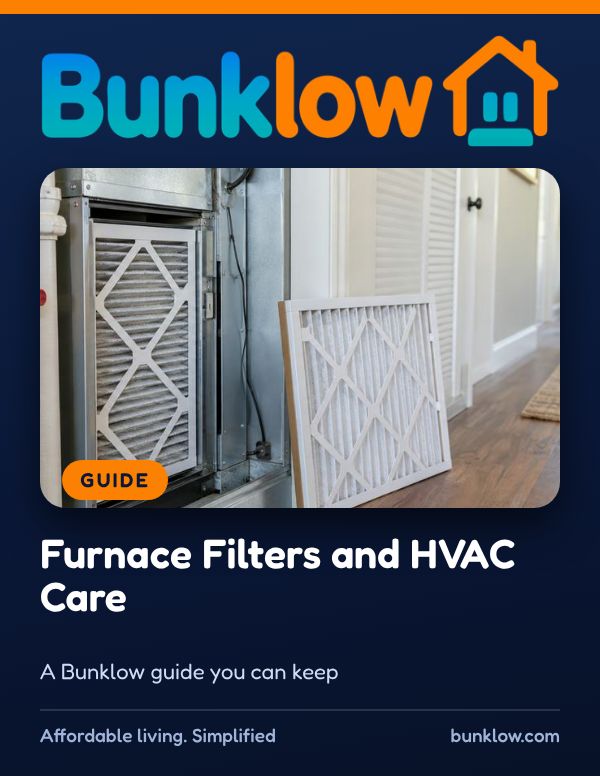
Furnace Filters and HVAC Care
A friendly, practical guide to filters, vents, thermostats and the simple seasonal habits that keep a home comfortable all year.
Where to start
- Smell gas or hear a carbon monoxide alarm?
Leave the home right away and call 911 or the gas utility from outside. See if the heat or cooling stops.
- Heat or air not keeping up?
Start with your filter, at a glance.
- Want to stay ahead of it?
Work through the furnace and HVAC checklist.
The short version
Heating and cooling systems need clean filters, clear vents and a seasonal check to keep a home safe and comfortable.
Check the filter every month and replace it when it looks dirty, generally at least every three months. Follow the airflow arrow.
Keep vents, returns and the space around the furnace clear, and schedule a professional check in the fall and spring.
If you smell gas or a carbon monoxide alarm sounds, leave the home right away and call for help from outside.
Rules about heat and maintenance differ from place to place, so we’d gently encourage a quick look at your lease and local rules. We would love to help.
Four simple rules
- 1Check the filter every month
Look at it monthly and replace it when it looks dirty, and generally at least every three months.
- 2Keep air moving freely
Vents, returns and the space around the furnace should stay clear of furniture, rugs and stored items.
- 3Tune up before each season
A professional check in the fall for heating and the spring for cooling keeps systems safe and efficient.
- 4Know when to step back
A gas smell, a burning smell or a carbon monoxide alarm means leave the home and call for help.
Furnace and HVAC checklist
From the guide’s own checklist. Tick each one as you go. Your ticks stay on this device. These are examples; your home may need others.
All done. Your home is set to stay comfortable in every season.
Your filter, at a glance
- Check the filter on the first day of every month. Replace it when it looks gray or dusty, and generally at least every three months, or more often with pets, allergies or construction dust nearby.
- The size and rating are printed on the old filter’s edge. Snap a phone photo of it before you shop.
- Every filter has an arrow on its edge. Install the new one with the arrow pointing toward the furnace or air handler, the way the air travels.
- Write the date on each new filter’s edge with a marker so everyone knows when it was last changed.
- A higher rated filter catches more fine particles, but some systems can’t push enough air through a very dense filter. Follow the system’s guidance on what it can handle.
Keep two or three spare filters of the correct size in the home, with the size written on the package. The next change takes two minutes instead of a shopping trip.
If the heat or cooling stops
- If you smell gas or a carbon monoxide alarm sounds, leave the home right away and call 911 or the gas utility from outside.
- If not, check the thermostat first. Make sure it is set to heat or cool, the setting is right, and the batteries are fresh.
- Check the breaker for the furnace or air conditioner, and the furnace power switch, which often looks like a light switch nearby.
- Look at the filter. A badly clogged filter can make a system shut down or blow weak air.
- Share what is happening in writing, including any sounds, smells or error lights, with photos if you can.
- In very hot or cold weather, keep everyone safe and comfortable while help is on the way. Please never use an oven, grill or stove to heat the home.
A surprising number of service calls are solved by two fresh thermostat batteries.
A few things to avoid
- Please don’t run the system without a filter, even for a day or two.
- Please don’t close most of the vents in the home to push air somewhere else. It can strain the system.
- Please don’t store paint, cleaners, boxes or laundry next to the furnace or water heater.
- Please don’t take apart the furnace or outdoor unit, or reset gas controls, beyond what the instructions say is safe.
Guides that go well with this one
Like it on paper?
The printable checklist for this guide is fillable, with a screen version and an ink saver print version. Keep it on your phone or pin it to the fridge.
How much do you remember?
4 quick questions from this guide, with a one line why for each. Totally optional, no sign in, and your answers are never saved.
Go deeper with The Perfect Seasonal Home Care Checklist Workbook
Simple, step by step checklists you can write in, one topic at a time, to help any home stay warm, safe and dry through every season.
Keep the full guide handy
The PDF has everything: everyday habits, what to do when something goes wrong, common myths, helpful resources and plenty of real-world tips. Print it, save it or share it with anyone who could use it.
Download the PDFTake it with you
- Bunklow Home Guide 013: Forced-Air Ductwork Balancing, Register Cleaning, and Airflow OptimizationA printable guide to forced-air ductwork balancing, register cleaning, and airflow optimization, in plain steps.See it in the shop
More guides
This guide shares general information to help you, and is not legal or safety-code advice. Bunklow does not inspect properties.