

Guide · Home care
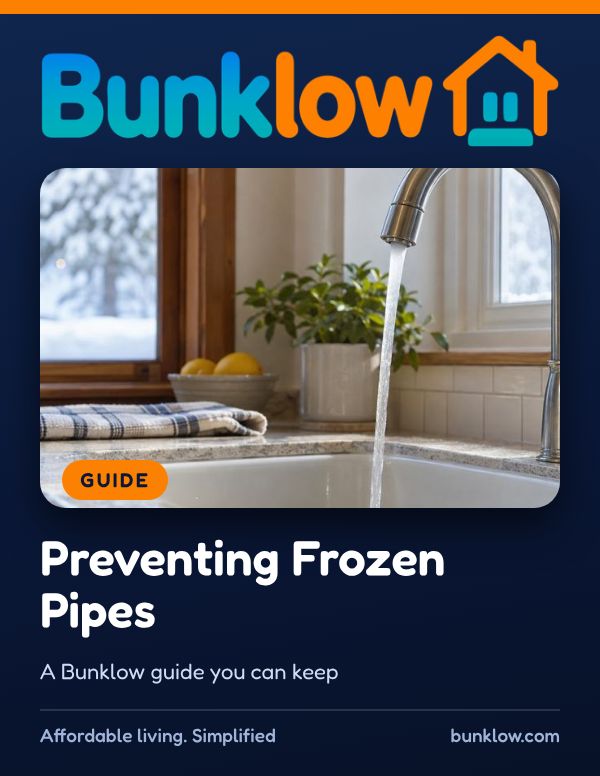
Preventing Frozen Pipes
A friendly, practical guide to keeping water moving when the weather turns bitter, and what to do if a pipe freezes or bursts.
Where to start
- Pipe burst?
Close the main water shutoff right away. Then see if a pipe freezes or bursts.
- Cold snap coming?
Tick through the cold snap checklist.
- Own the home?
Start with before freezing weather.
The short version
Pipes can freeze and burst on the coldest nights, especially in unheated spaces, along outside walls and under sinks.
Keep the heat on, generally no lower than 55°F, open cabinet doors under sinks, and let a faucet drip slowly on the coldest nights.
Disconnect hoses, drain outdoor lines, insulate exposed pipes, and make sure everyone knows where the main water shut-off is.
If a pipe freezes, thaw it gently with a hair dryer, never a flame. If it bursts, close the main shut-off and call a plumber.
Rules about heat and plumbing differ from place to place, so we’d gently encourage a quick look at your local rules. We would love to help.
Four simple rules
- 1Keep the heat on
Keep the home heated day and night in cold weather, and generally no lower than 55°F, even when away, as the Red Cross advises.
- 2Let warm air reach the pipes
Open cabinet doors under sinks on outside walls so the home’s warmth can reach the pipes inside.
- 3Keep a little water moving
On the coldest nights, a slow drip from a faucet on an outside wall can help keep pipes from freezing.
- 4Know the main shut-off
Everyone in the home should know where the main water shut-off is and how to close it, before it is ever needed.
If a pipe freezes or bursts
- This is an emergency, so act right away. If a pipe bursts, close the main water shutoff immediately to stop the flow.
- If water is near outlets, cords or the electrical panel, stay out of the water and call for help. Only turn off power at the panel if you can reach it safely while standing on a dry surface.
- If a faucet only trickles, the pipe may be frozen. Leave the faucet open so water can flow as it thaws.
- Warm a frozen section gently with a hair dryer, a heating pad, or a space heater kept away from anything that can burn. Never use an open flame. If it is in an attic, crawl space or anywhere you can’t reach from the floor, leave it for a professional.
- Move belongings out of the water, mop up what you can, and take photos and video of the pipe and any damage.
- Share what happened right away so a licensed plumber can come, and keep heat in the home while you wait.
Before winter, put a small tag on the main water shutoff valve and take a photo of where it is. In an emergency, anyone can find it in seconds instead of minutes.
Cold snap checklist
From the guide’s own checklist. Tick each one as you go. Your ticks stay on this device. These are examples; your home may need others.
All done. We hope you stay warm and dry all winter long.
For owners: before freezing weather
From the guide’s own checklist. Tick each one as you go. Your ticks stay on this device. These are examples; your home may need others.
All done. A little warmth and a little moving water get a home through even the coldest nights.
Pipes most at risk
These are common examples, not a complete list.
- Pipes in unheated spaces like attics, crawl spaces, garages and basements.
- Pipes on outside walls and under sinks on outside walls.
- Outdoor faucets, hoses, sprinkler lines and pool supply lines, which are best drained or shut off before freezing weather.
After a freeze, gurgling, banging or a faint musty smell from a wall can mean a hidden leak. It is always worth sharing.
For owners: after a freeze or a break
- Treat a burst or frozen pipe as an emergency, and respond as quickly as possible.
- Use a licensed plumber for repairs, and check nearby pipes for other cracks once the water is back on.
- Dry wet areas within about 24 to 48 hours to help prevent mold, following EPA guidance.
- Document everything with photos, dates and receipts, which also helps with any insurance claim.
- Look at why the pipe froze, and add insulation, sealing or heat to help keep it from happening again.
- Follow up kindly to make sure everyone’s belongings and comfort have been looked after.
Guides that go well with this one
Helpful resources
The guide points to these for details. Rules differ from place to place, so the official pages where your home is are the best guide.
Like it on paper?
The printable checklist for this guide is fillable, with a screen version and an ink saver print version. Keep it on your phone or pin it to the fridge.
How much do you remember?
4 quick questions from this guide, with a one line why for each. Totally optional, no sign in, and your answers are never saved.
Go deeper with The Perfect Seasonal Home Care Checklist Workbook
Simple, step by step checklists you can write in, one topic at a time, to help any home stay warm, safe and dry through every season.
Keep the full guide handy
The PDF has everything: everyday habits, what to do when something goes wrong, common myths, helpful resources and plenty of real-world tips. Print it, save it or share it with anyone who could use it.
Download the PDFTake it with you
- Bunklow Home Guide 081: Exterior Hose Bib Isolation, Water Line Draining, and Foam Bonnet ShellsA printable guide to exterior hose bib isolation, water line draining, and foam bonnet shells, in plain steps.See it in the shop
- Plumbing and Water Checklist PackThe Plumbing and Water checklists in one pack, fillable on screen or printable.See it in the shop
More guides
This guide shares general information to help you, and is not legal or safety-code advice. Bunklow does not inspect properties.