

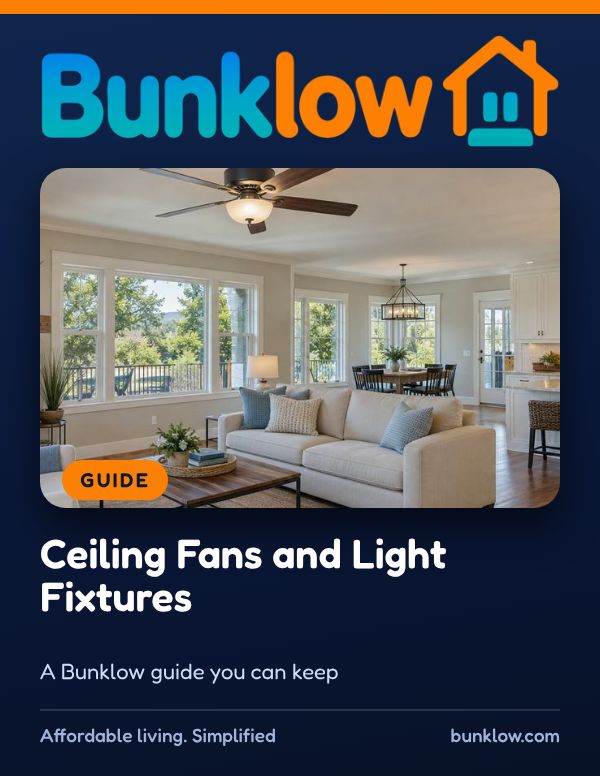
Guide · Home care
Ceiling Fans and Light Fixtures
A friendly, practical guide to bulbs, fixtures and ceiling fans, from the right bulb to a wobbly fan to knowing when to call an electrician.
Where to start
- Burning smell, sparks or smoke?
Leave the room and call 911. See if a light or fan acts up.
- Changing a bulb?
Switch off, let it cool, and never go over the fixture’s wattage. See reading the bulb box.
- Fan set for the season?
Check the fan direction. It takes a minute.
The short version
Lights and ceiling fans are easy to care for, and a few simple habits keep everyone safe and comfortable.
Turn off the switch and let bulbs cool before changing them, and never use a bulb above the fixture’s maximum wattage.
Dust fan blades every month or two, set the direction for the season, and turn fans off when you leave the room.
A burning smell, sparks, a warm switch plate, buzzing or flickering that a new bulb doesn’t fix are worth sharing right away. Wiring work is for a licensed electrician.
Rules about repairs and electrical work differ from place to place, so we’d gently encourage a quick look at the rules where your home is. If you ever have questions, we would love to help.
Four simple rules
- 1Power off first
Turn off the switch, and let a bulb cool before you touch it. For anything beyond a bulb, turn off the breaker.
- 2Never go over the wattage
Every fixture has a maximum wattage label. Using a stronger bulb can overheat the fixture and wiring.
- 3Warm, buzzing or flickering? Share it
A warm switch, buzzing sound or flicker that isn’t the bulb can be a wiring issue worth a professional look.
- 4Wiring is for licensed pros
Changing a bulb is everyday care. Installing or rewiring a fixture or fan is a job for a licensed electrician.
Your lights and fans checklist
From the guide’s own checklist. Tick each one as you go. These are examples; your home may need others.
All done. Bright, comfortable and safe.
Reading the bulb box
Lumens tell you how bright a bulb is. Watts tell you how much power it uses. Pick the brightness you want in lumens, then make sure the bulb is right for the fixture.
The U.S. Department of Energy says LED bulbs use up to 90 percent less energy and last up to 25 times longer than traditional incandescent bulbs, and they run much cooler.
Fan direction made easy
Stand under the fan and look up. In summer, the blades should turn counterclockwise to send a cool breeze down.
In winter, set them clockwise on low to gently push warm air down from the ceiling. Most fans have a small direction switch on the motor housing.
If a light or fan acts up
- If you smell burning or see sparks or smoke, leave the room and call 911.
- If it is safe to reach, turn off the breaker for that room at the electrical panel.
- Keep everyone away from a fan that is wobbling hard, scraping or grinding.
- Don’t touch a broken bulb with bare hands. With the power off, put on gloves and sweep it up carefully.
- Take a photo or short video of the problem, including any scorch marks or the fixture label.
- Share it in writing right away, with the room, the switch and what you noticed.
You did exactly the right thing.
Guides that go well with this one
How much do you remember?
4 quick questions from this guide, with a one line why for each. Totally optional, no sign in, and your answers are never saved.
Go deeper with The Perfect Toolkit
A calm, plain guide for residents and owners to building a basic home toolkit, using it safely for small everyday fixes, and knowing exactly when to stop and call the owner or a pro.
Keep the full guide handy
The PDF has everything: everyday habits, what to do when something goes wrong, common myths, helpful resources and plenty of real-world tips. Print it, save it or share it with anyone who could use it.
Download the PDFTake it with you
- Bunklow Home Guide 052: Ceiling Fan Motor Reversing Switches and Seasonal Airflow OptimizationA printable guide to ceiling fan motor reversing switches and seasonal airflow optimization, in plain steps.See it in the shop
More guides



This guide shares general information to help you, and is not legal or safety-code advice. Electrical work should be done by a licensed electrician. Bunklow does not inspect properties or make repairs.