

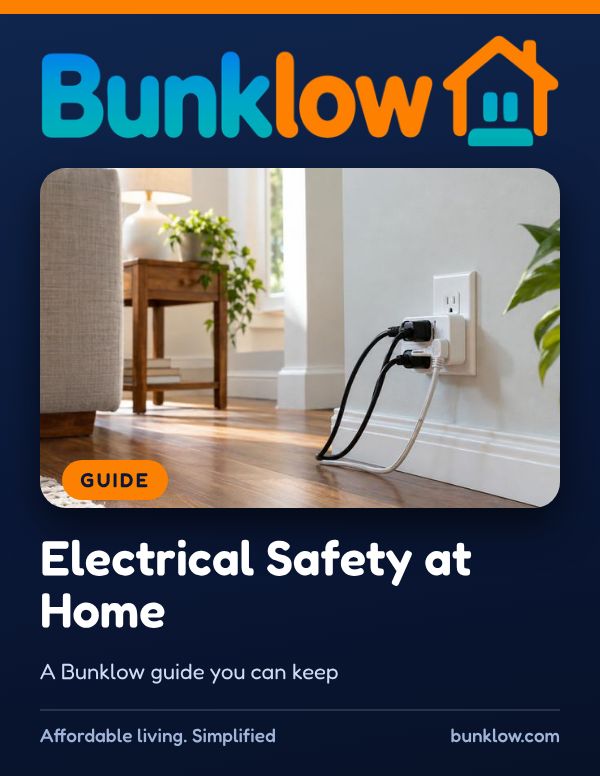
Guide · Safety and emergencies
Electrical Safety at Home
A friendly, practical guide to outlets, cords, breakers and the quiet warning signs that tell you when to get help.
Where to start
- Sparks, smoke or flames?
Get everyone out and call 911 from outside. Never use water on an electrical fire. See if something sparks, smells or trips.
- Breaker keeps tripping or an outlet feels warm?
Stop using it and follow these steps, then see the signs it is time to call for help.
- Want to check your home?
Work through the everyday electrical checklist.
The short version
Electrical problems usually give quiet warnings first, like warm outlets, flickering lights, buzzing or a burning smell. Sharing them early keeps everyone safe.
Plug major appliances and space heaters directly into the wall, use extension cords only for short-term needs, and never overload outlets or power strips.
Test GFCI outlets about once a month, and keep water and wet hands away from anything electrical.
If a breaker trips, reset it once. If it trips again, or anything sparks or smells hot, stop using it and call a licensed electrician.
Rules about electrical work differ from place to place, so we’d gently encourage a quick look at your local rules. If you ever have questions, we would love to help.
Four simple rules
- 1Never ignore a warning sign
Warm outlets, a burning smell, buzzing or sparks all deserve attention right away. Please share them as soon as you notice.
- 2Extension cords are temporary
They are meant for short-term use. Big appliances and heaters should plug directly into a wall outlet.
- 3Keep water and electricity apart
Outlets near sinks, tubs and outdoors should be GFCI protected, and hands should be dry before touching anything electrical.
- 4Leave wiring to a professional
Repairs inside walls, outlets or the panel are a job for a licensed electrician, never a guess.
Everyday electrical checklist
From the guide’s own checklist. Tick each one as you go. Your ticks stay on this device. These are examples; your home may need others.
All done. Thank you for keeping everyone safe.
If something sparks, smells or trips
- If you see sparks, smoke or flames, get everyone out and call 911 from outside. Never use water on an electrical fire.
- If it is safe to do so, unplug the device or switch off its breaker at the panel.
- If a breaker trips, unplug a few things on that circuit, then reset it once by switching it fully off, then on.
- If it trips again, or an outlet is warm, buzzing or discolored, leave it off and stop using that outlet.
- Share what happened right away in writing, with a photo, so it can be checked by a professional.
- Wait for a licensed electrician to confirm it is safe before using that outlet or circuit again.
When a breaker trips, think about what was just turned on. A hair dryer and a space heater on the same circuit is a very common cause.
Signs it is time to call for help
- An outlet or switch that feels warm, sparks, buzzes or looks discolored.
- Lights that flicker or dim often.
- A burning or hot plastic smell.
- A breaker that trips again and again.
- A mild tingle when touching an appliance, faucet or switch. Stop using it and share it right away.
These are common examples, not a complete list. Repairs inside walls, outlets or the panel are a job for a licensed electrician, never a guess.
Guides that go well with this one
Like it on paper?
The printable checklist for this guide is fillable, with a screen version and an ink saver print version. Keep it on your phone or pin it to the fridge.
How much do you remember?
4 quick questions from this guide, with a one line why for each. Totally optional, no sign in, and your answers are never saved.
Go deeper with The Perfect Seasonal Home Care Checklist Workbook
Simple, step by step checklists you can write in, one topic at a time, to help any home stay warm, safe and dry through every season.
Keep the full guide handy
The PDF has everything: everyday habits, what to do when something goes wrong, common myths, helpful resources and plenty of real-world tips. Print it, save it or share it with anyone who could use it.
Download the PDFTake it with you
- Bunklow Home Guide 017: Ground Fault Circuit Interrupter (GFCI) Outlets and Testing ProtocolsA printable guide to ground fault circuit interrupter (gfci) outlets and testing protocols, in plain steps.See it in the shop
- Bunklow Home Guide 093: Outdoor Electrical In-Use Weatherproof Bubble Cover CheckA printable Bunklow guide to outdoor electrical in-use weatherproof bubble cover check: plain steps, how often to check, and when to call a pro.See it in the shop
- Fire and Electrical Safety Checklist PackThe Fire and Electrical Safety checklists in one pack, fillable on screen or printable.See it in the shop
More guides
This guide shares general information to help you, and is not legal or safety-code advice. For any electrical repair, please contact a licensed electrician. Bunklow does not inspect properties.