

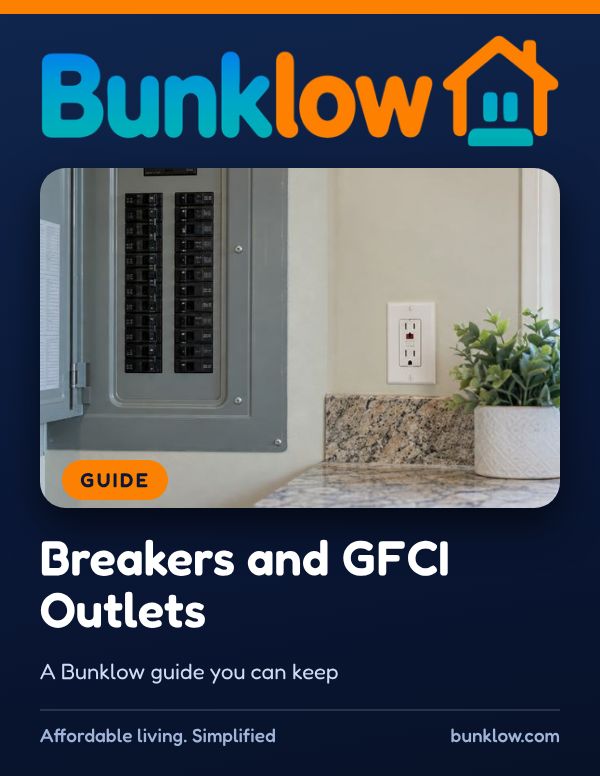
Guide · Safety and emergencies
Breakers and GFCI Outlets
A friendly, practical guide to tripped breakers, resetting GFCI and AFCI outlets, avoiding overloaded circuits, and knowing when it is time to call a licensed electrician.
Where to start
- Sparks, smoke or heat?
If there is fire, get everyone out and call 911. See if you see sparks, smoke or heat.
- An outlet just went dead?
Check nearby GFCI outlets and press reset. See resetting safely.
- Just want good habits?
Start with the checklist. Know where the panel is.
The short version
When a breaker or GFCI outlet trips, it is doing its job: protecting the home.
Know where your panel is, and check nearby GFCI outlets when an outlet goes dead.
Reset a tripped breaker by pushing it fully off, then on. If it trips again right away, stop and report it.
Spread out high-power appliances, never remove panel covers, and share sparks, heat or buzzing right away.
Electrical rules differ from place to place, so we’d gently encourage a quick look at the rules where your home is. If you ever have questions, we would love to help.
Four simple rules
- 1Know where the panel is
Find the breaker panel before you need it, and keep it easy to reach.
- 2Reset once, not over and over
If a breaker or GFCI trips again right away, stop and report it.
- 3Spread out the load
Heaters, hair dryers and microwaves on one circuit can trip it.
- 4Call a professional for wiring
Only licensed electricians should open panels, outlets or wiring.
Your good electrical habits checklist
From the guide’s own checklist. Tick each one as you go. These are examples; your home may need others.
All done. Your home is in good hands.
Resetting safely
- If an outlet is dead, check nearby GFCI outlets in bathrooms, kitchens, garages and outside, and press reset.
- Reset a tripped breaker by pushing it fully off, then on.
- If it trips again right away, stop and report it.
- Please don’t tape a breaker on or replace it with a larger one. That can let wires overheat and start a fire.
If you see sparks, smoke or heat
- If there is fire, get everyone out and call 911.
- If an outlet sparks, smokes, smells hot or burns, stop using it and unplug things only if it is safe.
- Turn off that circuit’s breaker if you can do it safely and without standing in water.
- Don’t use the outlet or circuit again until it has been checked.
- Take photos of any scorch marks or melted plugs.
- Call the owner or manager right away, and follow up in writing.
You did exactly the right thing.
Guides that go well with this one
How much do you remember?
4 quick questions from this guide, with a one line why for each. Totally optional, no sign in, and your answers are never saved.
Go deeper with The Perfect Toolkit
A calm, plain guide for residents and owners to building a basic home toolkit, using it safely for small everyday fixes, and knowing exactly when to stop and call the owner or a pro.
Keep the full guide handy
The PDF has everything: everyday habits, what to do when something goes wrong, common myths, helpful resources and plenty of real-world tips. Print it, save it or share it with anyone who could use it.
Download the PDFTake it with you
- Bunklow Home Guide 016: Electrical Service Panel Circuit Breakers and Tripped Breaker DiagnosticsA printable guide to electrical service panel circuit breakers and tripped breaker diagnostics, in plain steps.See it in the shop
- Bunklow Home Guide 017: Ground Fault Circuit Interrupter (GFCI) Outlets and Testing ProtocolsA printable guide to ground fault circuit interrupter (gfci) outlets and testing protocols, in plain steps.See it in the shop
- Fire and Electrical Safety Checklist PackThe Fire and Electrical Safety checklists in one pack, fillable on screen or printable.See it in the shop
More guides
This guide shares general information to help you, and is not legal or electrical advice. Please call a licensed electrician for any electrical work. Bunklow does not inspect or repair electrical systems.