

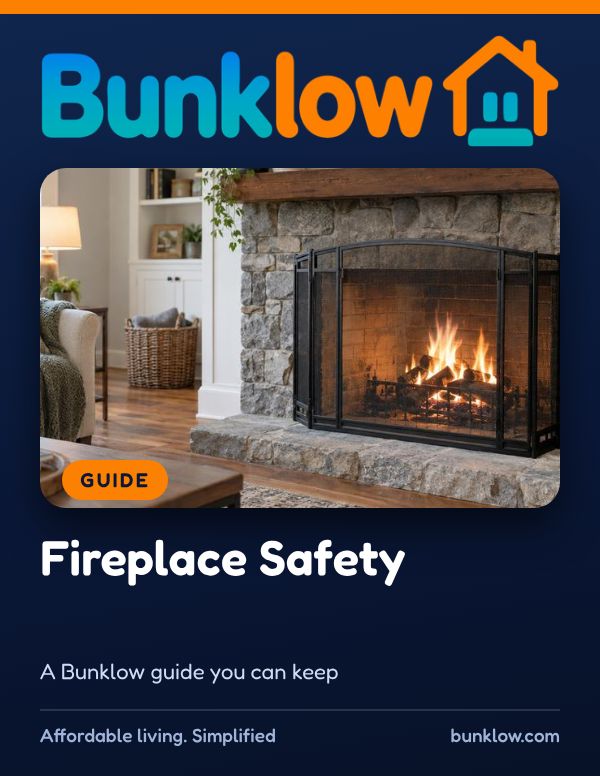
Guide · Safety and emergencies
Fireplace Safety
A friendly, practical guide to enjoying a warm fire safely, from the chimney and damper to the ashes the morning after.
Where to start
- Fire spreading, or a loud roar in the chimney?
Get everyone out and call 911 from outside. See if something goes wrong.
- Lighting the first fire of the season?
Work through the fireplace safety checklist.
- Not sure your wood is dry?
The short version
A fireplace or wood stove is a joy to use safely with a few simple habits.
Have the chimney inspected each year, burn only dry seasoned wood, and keep anything that can burn at least three feet away.
Open the damper before lighting, use a screen, and never leave a fire alone or use flammable liquids to start it.
Put cooled ashes in a metal container with a lid, outside and at least 10 feet from the home, and keep smoke and CO alarms working.
Rules about fireplaces and burning differ by lease and location. If you ever have questions, we would love to help.
Four simple rules
- 1Inspect the chimney every year
Chimneys and wood stoves should be inspected, and cleaned as needed, by a qualified professional each year before use.
- 2Burn only dry, seasoned wood
Dry wood burns cleaner and hotter, with less smoke and less buildup inside the chimney.
- 3Keep three feet clear
Keep anything that can burn at least three feet from the fireplace or stove, and use a screen or closed doors.
- 4Ashes go in metal, outside
Put cooled ashes in a metal container with a lid, and set it outside at least 10 feet from the home.
Fireplace safety checklist
From the guide’s own habits. Tick each one as you go. Your ticks stay on this device. These are examples; your fireplace or stove may need others.
All done. Enjoy a warm, safe fire.
What to burn, and what not to
- Burn dry, seasoned hardwood or manufactured logs made for fireplaces, following the package instructions.
- Seasoned wood is usually split and stored dry for at least six months.
- Never burn trash, cardboard, wrapping paper, painted or treated wood, plastic, or wet wood. They create more smoke, harmful fumes and chimney buildup.
- Keep firewood stacked off the ground, covered on top, and away from the home’s walls.
Knock two pieces of firewood together. Dry, seasoned wood makes a sharp, hollow crack, has cracks on the ends, and feels lighter. Wet wood makes a dull thud.
If something goes wrong
- If a fire spreads beyond the fireplace or you hear a loud roaring in the chimney, get everyone out and call 911 from outside.
- If a carbon monoxide alarm sounds, or people feel dizzy or sick, go outside to fresh air right away and call 911.
- If smoke is backing into the room, let the fire burn down safely, open a window, and don’t add more wood.
- Never go back inside for belongings, and let the fire department say when it is safe.
- When everyone is safe, take photos of any damage or smoke stains if you can do so safely.
- Let whoever handles repairs know in writing as soon as you can. Please don’t use the fireplace again until it has been checked.
Ashes can stay hot enough to start a fire for days. Always use a metal container with a lid, set outside at least 10 feet from the home.
Guides that go well with this one
Like it on paper?
The printable checklist for this guide is fillable, with a screen version and an ink saver print version. Keep it on your phone or pin it to the fridge.
How much do you remember?
4 quick questions from this guide, with a one line why for each. Totally optional, no sign in, and your answers are never saved.
Go deeper with The Perfect Seasonal Home Care Checklist Workbook
Simple, step by step checklists you can write in, one topic at a time, to help any home stay warm, safe and dry through every season.
Keep the full guide handy
The PDF has everything: everyday habits, what to do when something goes wrong, common myths, helpful resources and plenty of real-world tips. Print it, save it or share it with anyone who could use it.
Download the PDFTake it with you
- Bunklow Home Guide 076: Fireplace Cooled Ash Extraction and 72-Hour Metal Bucket StorageA printable Bunklow guide to fireplace cooled ash extraction and 72-hour metal bucket storage: plain steps, how often to check, and when to call a pro.See it in the shop
- Bunklow Home Guide 078: Chimney Flue Creosote Stage Identification and Sweep IntervalsA printable Bunklow guide to chimney flue creosote stage identification and sweep intervals: plain steps, how often to check, and when to call a pro.See it in the shop
- Fire and Electrical Safety Checklist PackThe Fire and Electrical Safety checklists in one pack, fillable on screen or printable.See it in the shop
More guides
This guide shares general information to help you, and is not legal, medical or safety-code advice. Bunklow does not inspect properties.