

Guide · Renting and leases
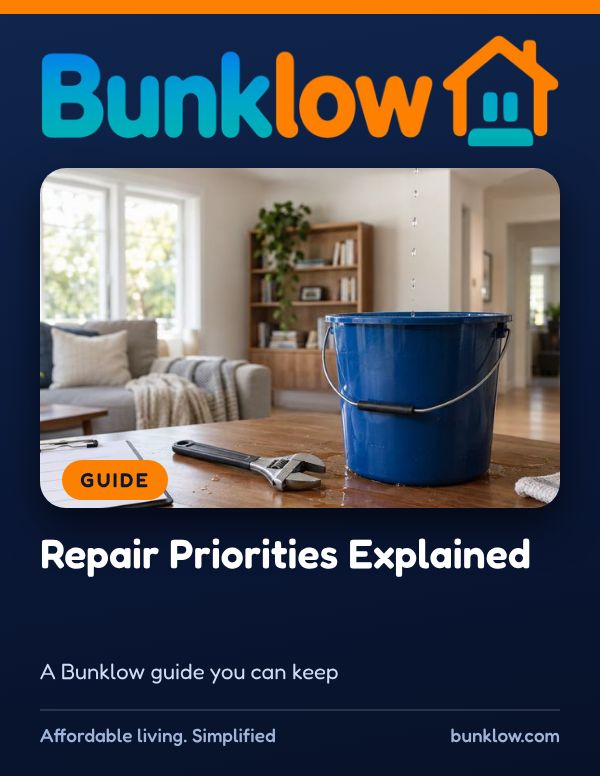
Repair Priorities Explained
A friendly, practical guide to how repairs are prioritized, from urgent problems like no heat, water or power to repairs that can be handled soon or on a routine schedule.
Where to start
- Is it an emergency?
Fire, smoke, a gas smell or someone hurt? Get out and call 911. See if it is an emergency.
- Wondering why another repair went first?
- Ready to report?
Use the how to report a repair well checklist.
The short version
Every repair matters, and some simply need attention faster than others. Our goal is always to fix things as quickly as we safely can.
Urgent repairs involve safety or basic needs, like fire, gas, flooding, no heat, no water or no power.
Soon repairs affect daily life, like broken appliances or slow leaks. Routine repairs are small fixes.
Report every problem in writing, with photos or video, and save the emergency number in your phone.
Repair rules differ from place to place, so we’d gently encourage a quick look at the rules where your home is. If you ever have questions, we would love to help.
Four simple rules
- 1Safety comes first
Fire, gas smells, flooding and anything that puts people at risk are always handled first.
- 2Report every problem
Big or small, please share it in writing. Small problems become big ones when ignored.
- 3Be clear and specific
Say what, where, when it started, and include photos or video.
- 4Stay in touch
Let each other know about access, timing and progress until the repair is done.
The three repair priorities
Every repair matters, and some simply need attention faster than others. These are examples, not a complete list.
- Urgent: safety risks and basic needs, like fire, gas, flooding, sewage, no heat in cold weather, no water, no power or a door that won’t lock.
- Soon: problems that affect daily life, like a broken appliance or a slow leak.
- Routine: small fixes, like a sticky drawer or a loose towel bar.
If something can safely wait until morning, a message is fine. If it can’t, use the emergency number. When in doubt, call.
How to report a repair well
From the guide’s own checklist. Tick each one as you go. Your ticks stay on this device. These are examples; your home may need others.
All done. A short video with sound makes a drip or a buzz much easier to fix.
If it is an emergency
- Stay calm. If there is fire, smoke or someone is hurt, get out and call 911.
- If you smell gas, leave right away and call the gas company or 911 from outside.
- For flooding, turn off the water at the shutoff if it is safe, and stay away from water near electricity.
- Call the owner or manager’s emergency number right away, then follow up in writing.
- Take photos and video, with the date and time, once everyone is safe.
- Keep a record of who you contacted and when.
Save the emergency repair number in your phone today, under a name you will find fast, like “Home Emergency.” You did exactly the right thing.
Guides that go well with this one
How much do you remember?
4 quick questions from this guide, with a one line why for each. Totally optional, no sign in, and your answers are never saved.
Go deeper with The Perfect Rental Owner Checklist Workbook
Simple, step by step checklists you can write in for owners who rent out a home: contractors, insurance, fair pricing, records, showings and more.
Keep the full guide handy
The PDF has everything: everyday habits, what to do when something goes wrong, common myths, helpful resources and plenty of real-world tips. Print it, save it or share it with anyone who could use it.
Download the PDFMore guides


This guide shares general information to help you, and is not legal advice. Repair priorities and timelines depend on the lease and the rules where the home is. Bunklow does not make repairs.