

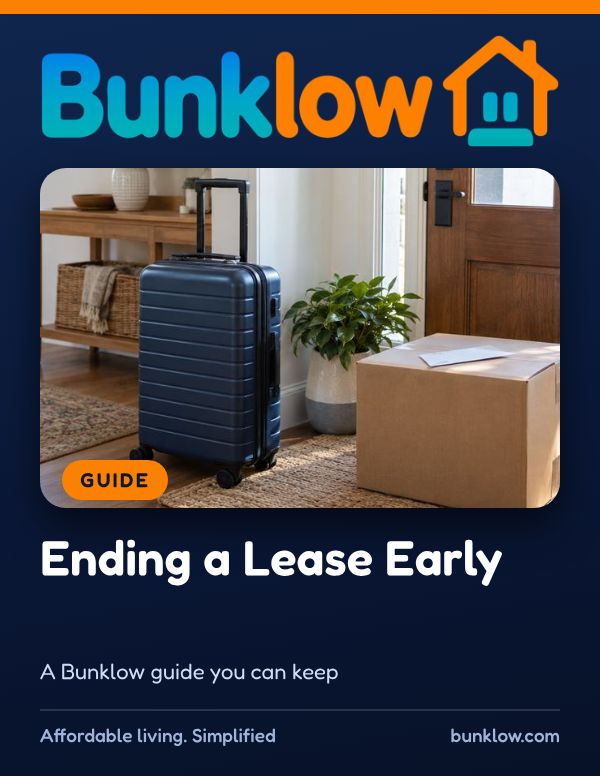
Guide · Renting and leases
Ending a Lease Early
A friendly, practical guide for when life changes: reading the lease, talking with the owner, giving notice, helping find a replacement and understanding possible costs.
Where to start
- Are you in danger?
Put your safety first and call 911 or a local support line. Then see if you need to leave quickly.
- Plans just changed?
Start with the steps that help, beginning with your lease.
- Wondering what your options are?
The short version
Life changes, and ending a lease early doesn’t have to be a fight. Honest, early conversations usually lead to a fair path.
Read your lease for early termination, subletting and notice terms, then talk with the owner as soon as you can.
Give notice in writing, keep paying rent as agreed, and offer to help find a replacement tenant.
Some people, like military members, may have special protections. A legal aid office can help you understand your options.
Lease rules differ from place to place, so we’d gently encourage a quick look at the rules where your home is. If you ever have questions, we would love to help.
Four simple rules
- 1Read the lease first
Look for early termination, subletting, assignment and notice sections.
- 2Talk early and honestly
Reach out to the owner as soon as you know plans may change.
- 3Put it in writing
Give notice and record every agreement in writing, with dates.
- 4Learn your local rules
Some places offer special protections. A quick look can help a lot.
Steps that help
From the guide’s own checklist. Tick each one as you go. Your ticks stay on this device. These are examples; your home may need others.
All done. You have done everything you can to find a fair path forward.
If you need to leave quickly
- Take a breath. Even urgent moves usually have a path forward.
- If you are in danger, put your safety first and call 911 or a local support line.
- Contact the owner or manager as soon as it is safe, and explain what you need.
- Ask about any special protections where you live, such as for military service or domestic violence.
- Give written notice and keep copies of everything.
- Reach out to a legal aid office or tenant association for advice.
Keep every message, notice and agreement in one folder on your phone. If questions come up later, everything is in one place. You did exactly the right thing.
Common early exit options
- A lease buyout or early termination fee.
- A mutual agreement to end the lease.
- Finding a qualified replacement tenant.
- Subletting or assignment with the owner’s permission.
- Special protections that apply in certain situations, such as some military moves.
These are examples, not a complete list. In a sublet, you usually stay responsible for the lease. In an assignment, a new tenant usually takes it over. The lease and the rules where your home is decide, and a legal aid office can help.
Guides that go well with this one
How much do you remember?
4 quick questions from this guide, with a one line why for each. Totally optional, no sign in, and your answers are never saved.
Go deeper with The Perfect Move-Out Checklist Workbook
Simple, step by step checklists you can write in for moving out: giving notice, cleaning, the pre move out walk, deposits, renewals and more.
Keep the full guide handy
The PDF has everything: everyday habits, what to do when something goes wrong, common myths, helpful resources and plenty of real-world tips. Print it, save it or share it with anyone who could use it.
Download the PDFTake it with you
- Moving Out and Deposits Checklist PackThe Moving Out and Deposits checklists in one pack, fillable on screen or printable.See it in the shop
More guides

This guide shares general information to help you, and is not legal advice. Please talk with a legal aid office or an attorney about your situation. Bunklow does not decide lease or deposit disputes.