

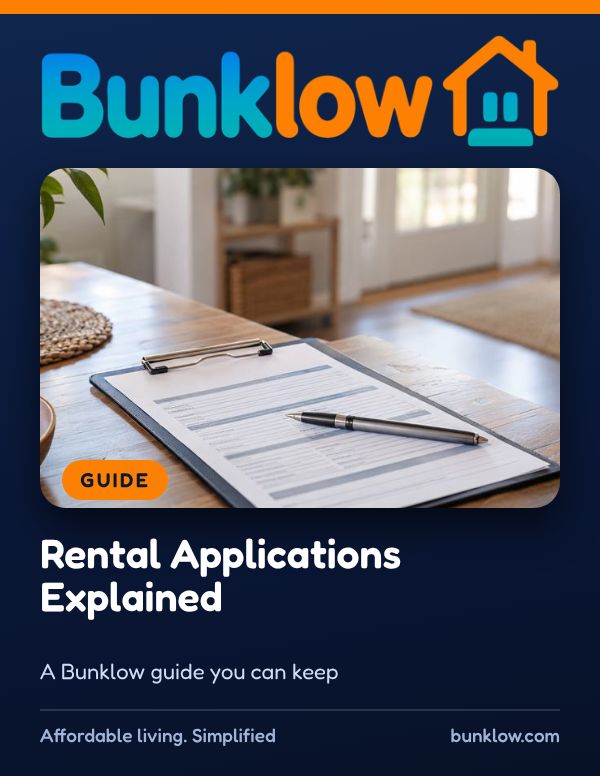
Guide · Renting and leases
Rental Applications Explained
A friendly, practical guide to how rental applications work, what is usually asked, and how to be ready when you find the right home.
Where to start
- Turned down?
A decision on one home is not a judgment of you. See if an application is turned down.
- Starting your search?
Get your folder together with ways to be ready.
- Taking applications as an owner?
Write your criteria first. See before taking applications.
The short version
A rental application helps an owner understand who would be living in the home. It usually asks about identity, income, rental history and references.
Fair screening uses the same written criteria for everyone. Federal law prohibits discrimination based on race, color, religion, sex, national origin, familial status or disability.
To be ready: gather your ID, proof of income and references, check your credit report, and ask about fees and criteria before you apply.
If you are turned down because of a screening report, you can generally get a free copy and dispute any errors you find.
Rules differ from place to place, so we’d gently encourage a quick look at your local rules. If you ever have questions, we would love to help.
Four simple rules
- 1Same criteria for everyone
Fair screening uses the same written standards for every applicant, applied the same way each time.
- 2Fair housing protects all
Federal law prohibits housing discrimination based on race, color, religion, sex, national origin, familial status or disability.
- 3Be honest and complete
Accurate, complete answers build trust and help decisions happen faster.
- 4Get it in writing
Fees, criteria and any decision should be clear and in writing, so everyone knows where they stand.
Ways to be ready
From the guide’s own checklist. Tick each one as you go. Your ticks stay on this device. These are examples; your home may need others.
All done. When you find the right home, you can apply the same day.
If an application is turned down
- Take a breath. A decision on one home is not a judgment of you as a person.
- Ask kindly, in writing, whether the decision was based on a screening report or other information.
- If a screening report was used, read the notice you receive. It should name the company that provided the report.
- Request your copy of the report from that company, and look carefully for errors.
- If you find a mistake, dispute it with the screening company in writing and keep copies.
- Ask whether the owner would reconsider once the error is corrected, or with a co signer or added information.
If something on your record needs explaining, one calm paragraph about what happened and what has changed can make a real difference.
For owners: before taking applications
From the guide’s checklist for reviewing applications fairly. Tick each one as you go. Your ticks stay on this device. These are examples; your home may need others.
All done. Clear, consistent standards are fair to all.
Guides that go well with this one
How much do you remember?
4 quick questions from this guide, with a one line why for each. Totally optional, no sign in, and your answers are never saved.
Go deeper with The Perfect Move-In Checklist Workbook
Simple, step by step checklists you can write in for moving in: the move in walk, moving day, your first week, utilities, keys and more.
Keep the full guide handy
The PDF has everything: everyday habits, what to do when something goes wrong, common myths, helpful resources and plenty of real-world tips. Print it, save it or share it with anyone who could use it.
Download the PDFTake it with you
- Leases, Rent and Money Checklist PackThe Leases, Rent and Money checklists in one pack, fillable on screen or printable.See it in the shop
More guides

This guide shares general information to help you, and is not legal advice. Bunklow is an advertising board. Renters can choose to share a profile they wrote about themselves. Bunklow does not run reports, score, rank, rate or approve anyone, and does not make rental decisions. Owners make their own decisions.