

Guide · For owners
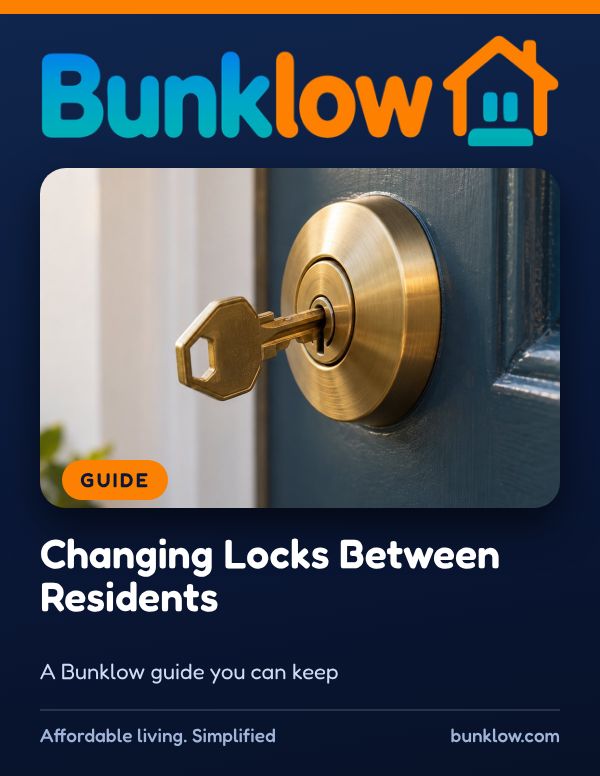
Changing Locks Between Residents
A friendly, practical guide to rekeying or changing locks after every move-out, keeping key logs, resetting smart lock codes and handling a resident’s request for new locks.
Where to start
- A key lost or stolen?
Take a breath. See if a key is lost or stolen.
- Turnover day?
Rekey, reset every code, test every lock. Use the turnover checklist.
- A resident asked for new locks?
Listen with kindness. See when a resident asks.
The short version
The first night in a new home should feel secure. Rekeying between residents makes that possible.
Rekey or change exterior locks after every move-out, and reset smart lock, garage and gate codes too.
Keep a key log, label key tags with numbers instead of addresses, and never hide a spare key outside.
If a resident asks for new locks, listen kindly, follow the rules where the home is, and put the plan in writing.
Lock rules differ from place to place, so we’d gently encourage a quick look at the rules where your home is. If you ever have questions, we would love to help.
Four simple rules
- 1Rekey every turnover
Rekey or change exterior locks after every resident moves out, before the next moves in.
- 2Reset every code
Change smart lock, keypad, garage and gate codes between residents too.
- 3Keep a key log
Write down every key, who has it and when it was returned.
- 4Respond kindly to requests
If a resident asks for new locks, listen, and follow the rules where the home is.
Your lock and key turnover checklist
From the guide’s own checklist. Tick each one as you go. These are examples; your home may need others.
All done. The new resident is the only one with a way in.
When a resident asks for new locks
Listen with kindness. A request for new locks usually comes from a real worry, and sometimes from a frightening situation.
If someone may be in danger, encourage them to contact the police and local support services. In an emergency, call 911. Some places have their own rules about lock changes, so check the rules where the home is.
Agree in writing on who changes the locks, who pays and how the owner keeps access for emergencies. Keep the request private, and write down what was done and when.
If a key is lost or stolen
- Take a breath. Lost keys happen to everyone.
- Think about where it might be and whether anything on it points to your home.
- If you believe it was stolen or you feel unsafe, call the police. In an emergency, call 911.
- Let the owner know in writing right away, ask about rekeying, and change any codes you control.
- Keep a note of who you told and when.
You did exactly the right thing.
Guides that go well with this one
How much do you remember?
4 quick questions from this guide, with a one line why for each. Totally optional, no sign in, and your answers are never saved.
Go deeper with The Perfect Rental Owner Checklist Workbook
Simple, step by step checklists you can write in for owners who rent out a home: contractors, insurance, fair pricing, records, showings and more.
Keep the full guide handy
The PDF has everything: everyday habits, what to do when something goes wrong, common myths, helpful resources and plenty of real-world tips. Print it, save it or share it with anyone who could use it.
Download the PDFTake it with you
- Bunklow Home Guide 119: Re-Keyable Modern Lock Cylinder Key Programming and ResettingA printable Bunklow guide to re-keyable modern lock cylinder key programming and resetting: plain steps, how often to check, and when to call a pro.See it in the shop
- The Perfect Rental Owner Checklist WorkbookA fillable workbook with a screen version and an ink saver print version.See it in the shop
More guides
This guide shares general information to help you, and is not legal or security advice. Please use a qualified locksmith for lock work. Bunklow does not change locks or provide security services.