

Guide · Renting and leases
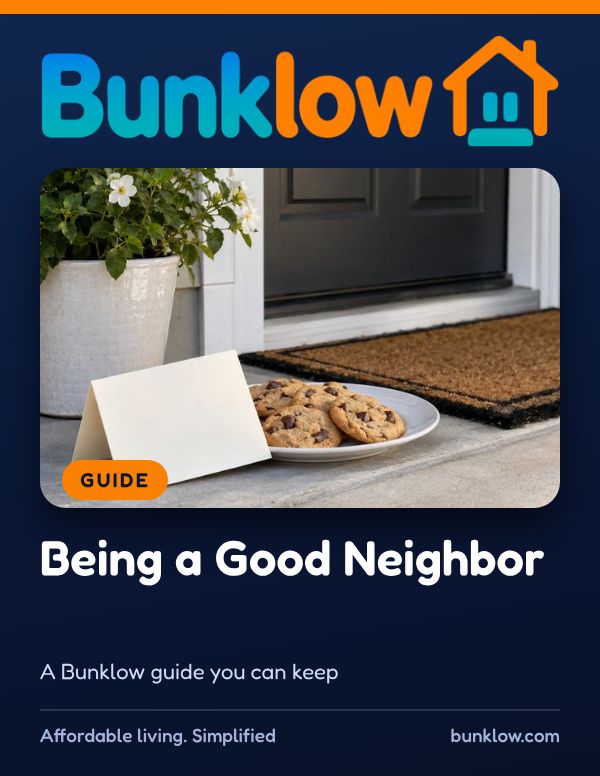
Being a Good Neighbor
A friendly, practical guide to noise, parking, shared spaces, and solving the little things kindly, before they become big things.
Where to start
- Something bothering you?
Wait until you feel calm and assume the best. See if a concern comes up.
- Just moved in?
The best time to be a good neighbor is the first week. Learn the quiet hours, parking spots and trash day, and say hello.
- Want simple habits?
Start with the checklist.
The short version
Being a good neighbor is mostly simple habits: say hello, keep sound in your space, share common spaces well, and talk kindly when something comes up.
Keep noise low during quiet hours, park only in your own space, put bins out on the right day, and keep hallways and exits clear.
Give neighbors a friendly heads-up before a party, a move or a noisy project. A little notice earns a lot of goodwill.
If a concern comes up, wait until you feel calm, assume the best, and talk kindly. If it continues, share it in writing with the owner or try community mediation.
Noise and community rules differ from place to place, so we’d gently encourage a quick look at your local rules. If you ever have questions, we would love to help.
Four simple rules
- 1Say hello first
A quick introduction makes every future conversation easier. People are kinder to neighbors they know.
- 2Mind the shared spaces
Hallways, laundry rooms, parking and yards belong to everyone. Leave them as you would like to find them.
- 3Keep sound in your space
Sound travels farther than we think, especially late at night and early in the morning.
- 4Talk kindly, and directly
If something bothers you, a calm, friendly conversation usually solves it faster than a note or a complaint.
Your good neighbor checklist
From the guide’s own simple habits. Tick each one as you go. These are examples; your neighborhood may have others.
All done. Your neighbors are lucky to have you.
If a concern comes up
- Take a breath and wait until you feel calm. Assume the best. Most neighbors simply don’t know.
- Knock at a good time, introduce yourself, and kindly share what you notice and how it affects you.
- Listen to their side, and look for a simple fix together, like moving a speaker or agreeing on quiet hours.
- Thank them, and follow up kindly if the issue continues.
- If it doesn’t improve, share the concern in writing with the owner or property manager, with dates and details.
- If you still can’t find a solution, a local community mediation service can help. If anyone feels unsafe, call 911 or the local non emergency line.
Try opening with “I’m not sure if you know, but…” It assumes the best and turns a complaint into a friendly heads up.
Guides that go well with this one
How much do you remember?
4 quick questions from this guide, with a one line why for each. Totally optional, no sign in, and your answers are never saved.
Go deeper with The Perfect Move-In Checklist Workbook
Simple, step by step checklists you can write in for moving in: the move in walk, moving day, your first week, utilities, keys and more.
Keep the full guide handy
The PDF has everything: everyday habits, what to do when something goes wrong, common myths, helpful resources and plenty of real-world tips. Print it, save it or share it with anyone who could use it.
Download the PDFTake it with you
- Roommates and Neighbors Checklist PackThe Roommates and Neighbors checklists in one pack, fillable on screen or printable.See it in the shop
More guides


This guide shares general information to help you, and is not legal advice. Bunklow does not settle disputes between neighbors.