

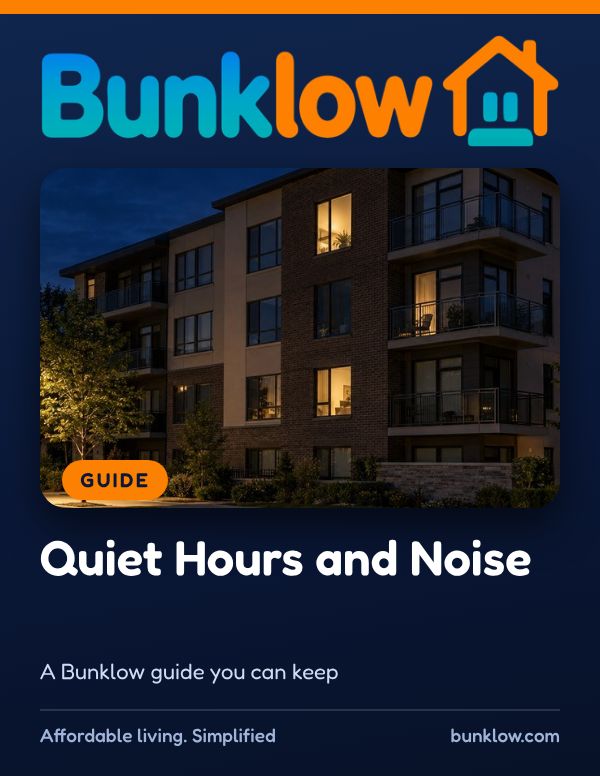
Guide · Roommates and shared living
Quiet Hours and Noise
A friendly, practical guide to sharing walls, floors and ceilings peacefully, with quiet hours, simple soundproofing and kind conversations.
Where to start
- Noise bothering you?
Take a breath first. See if noise is bothering you. For any emergency or threat, call 911.
- Want to be a quieter neighbor?
Tick through quiet habits that help.
- Setting up a shared home?
Start with setting quiet expectations.
The short version
Most noise problems are accidental. People rarely realize how far footsteps, music or voices travel through walls and floors.
Agree on quiet hours together, use headphones late at night, and keep speakers and TVs away from shared walls and floors.
Simple soundproofing helps a lot: rugs with pads, felt pads on furniture, door sweeps, curtains and bookshelves on shared walls.
If noise bothers you, note when it happens, then talk kindly at a calm time and agree on one or two simple fixes together.
Noise rules differ from place to place, so a quick look at your lease and local rules helps. For any threat, call 911. We would love to help.
Four simple rules
- 1Agree on quiet hours
Pick quiet hours together, often about 10 p.m. to 7 a.m. on weeknights, and write them down.
- 2Sound travels farther than you think
Footsteps, bass and voices carry through floors and walls. Assume others can hear you.
- 3Soften what you can
Rugs, felt pads and headphones make a big difference for very little effort.
- 4Talk first, kindly
A friendly, face-to-face conversation solves most noise concerns before they grow.
Quiet habits that help
From the guide’s own checklist. Tick each one as you go. Your ticks stay on this device. These are examples; your home may need others.
All done. We hope everyone rests a little easier, on both sides of the wall.
If noise is bothering you
- Take a breath. Most people have no idea how loud they sound on the other side of the wall.
- Note when the noise happens and what it is, so you can describe it clearly.
- Talk in person at a calm time, or leave a friendly note, rather than in the moment.
- Share the specifics kindly, like “Footsteps carry into my bedroom around midnight,” and ask for ideas together.
- Agree on one or two simple fixes, like a rug or headphones, and thank them for trying.
- If it continues, reach out to whoever manages the home in writing. For any emergency or threat, call 911.
Start a noise conversation with “I don’t think you realize this, but…” It assumes the best, and it almost always gets a friendly answer.
Setting quiet expectations
From the guide. Tick each one as you go. Your ticks stay on this device. These are examples; your home may need others.
All done. Revisit quiet hours when schedules change, like a new night shift or a new baby.
Simple ways to soften sound
These are examples from the guide. Small changes often make the biggest difference.
- A rug with a thick pad softens footsteps for the people below. Hallways and bedrooms on upper floors make the biggest difference.
- A full bookshelf or dresser against a shared wall helps absorb sound. Keep speakers and TVs a few inches away from the wall.
- A door sweep and weatherstripping around a bedroom door are inexpensive and block a surprising amount of sound and light.
- Low bass travels through walls and floors far more than voices. Turning bass down, or using headphones, often solves the whole problem.
Guides that go well with this one
Helpful resources
The guide points to these for details. Rules differ from place to place, so the official pages where your home is are the best guide.
Like it on paper?
The printable checklist for this guide is fillable, with a screen version and an ink saver print version. Keep it on your phone or pin it to the fridge.
How much do you remember?
4 quick questions from this guide, with a one line why for each. Totally optional, no sign in, and your answers are never saved.
Go deeper with The Perfect Move-In Checklist Workbook
Simple, step by step checklists you can write in for moving in: the move in walk, moving day, your first week, utilities, keys and more.
Keep the full guide handy
The PDF has everything: everyday habits, what to do when something goes wrong, common myths, helpful resources and plenty of real-world tips. Print it, save it or share it with anyone who could use it.
Download the PDFTake it with you
- Roommates and Neighbors Checklist PackThe Roommates and Neighbors checklists in one pack, fillable on screen or printable.See it in the shop
More guides

This guide shares general information to help you, and is not legal or medical advice. Bunklow does not inspect properties or decide deposits.