

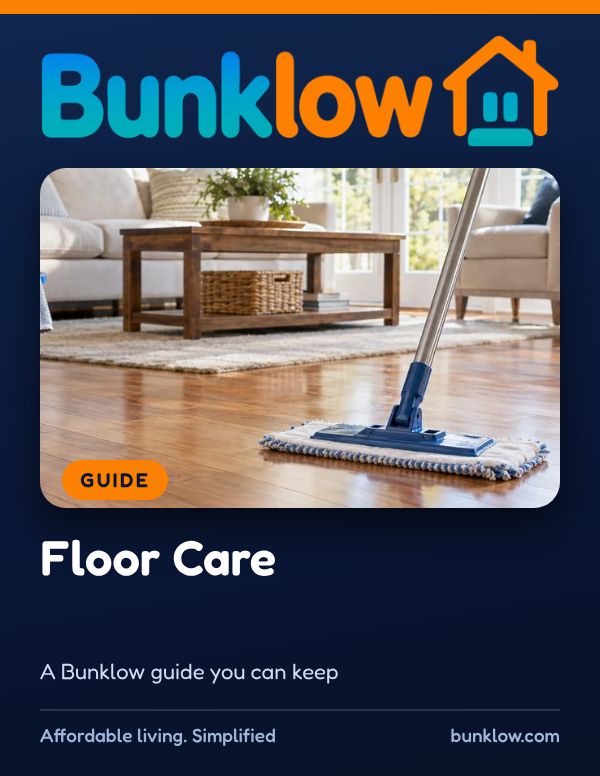
Guide · Home care
Floor Care
A friendly, practical guide to carpet, hardwood, laminate, vinyl and tile, from everyday cleaning to spills, scratches and what to share.
Where to start
- Something just spilled or leaked?
Stop the source if you safely can and soak it up right away. See when something spills or floods.
- Not sure what your floor likes?
- Want floors that last?
Work through the floor care checklist.
The short version
Floors carry every day of life in a home. A few simple habits keep carpet, hardwood, laminate, vinyl and tile looking good and keep everyone safe on their feet.
Stop grit with doormats, vacuum and sweep often, blot spills quickly, and use felt pads under furniture.
Hardwood and laminate like dry dusting and a barely damp mop. Always follow the floor maker’s instructions and test new cleaners in a hidden spot.
If water gets on or under a floor, soak it up, help it dry, and share photos right away. Soft spots, lifting edges and loose tiles are worth sharing early.
Expectations about wear and damage differ from place to place, so we’d gently encourage a quick look at your local rules. If you ever have questions, we would love to help.
Four simple rules
- 1Stop the grit at the door
Mats inside and outside each entry, and shoes off where you can, keep sand and grit from scratching floors and wearing carpet.
- 2Blot spills quickly
Most stains and water damage come from spills left to sit. Blot right away, never rub, and dry the area well.
- 3Go easy on water
Hardwood and laminate don’t like standing water. A damp, well-wrung mop is almost always enough.
- 4Pad and lift, never drag
Felt pads under furniture and lifting instead of dragging prevent most scratches and dents.
Floor care checklist
From the guide’s own checklist. Tick each one as you go. Your ticks stay on this device. These are examples; your home may need others.
All done. Your floors are set to look good for years.
What each floor likes best
- Carpet likes regular vacuuming, more often in hallways and busy walkways, and quick blotting when something spills.
- Hardwood and laminate like dry dusting or sweeping and only a lightly damp mop. If the floor stays wet for more than a minute or two after mopping, there is too much water.
- Vinyl and tile handle damp mopping well with a mild cleaner made for that floor.
Every floor is a little different, so the care instructions from the floor’s maker are always the best guide when you have them.
When something spills or floods
- If water is still coming, stop the source if you safely can, like turning off the supply valve to a toilet or sink.
- Soak up the water right away with towels or a wet vacuum.
- For carpet spills, blot with a clean white cloth, working from the edge of the spot toward the center. Then blot with plain water and blot dry. Please don’t rub.
- Move rugs and furniture off the wet area so the floor underneath can dry.
- Run fans and open windows if the weather allows.
- Take photos and share what happened in writing as soon as you can, even if it looks dry, including where it is, like “by the dishwasher.”
- Keep an eye on the spot for a few days. Cupping, swelling, a musty smell or dark spots are worth sharing again.
Floors next to dishwashers, refrigerators, toilets and tubs are often the first to show a hidden leak. Take a quick look for swelling, soft spots or lifting edges every so often.
A few things to avoid
- Please don’t wet mop hardwood or laminate with lots of water, or use a steam cleaner on them, unless the floor’s maker says it’s okay.
- Please don’t drag furniture or appliances. Lift them, or use sliders or a helper.
- Please don’t use bleach, ammonia, vinegar or gritty powders on floors unless the floor’s care instructions allow it.
- Please don’t leave wet towels, potted plants without saucers or pet water bowls sitting right on wood or laminate.
Guides that go well with this one
Like it on paper?
The printable checklist for this guide is fillable, with a screen version and an ink saver print version. Keep it on your phone or pin it to the fridge.
How much do you remember?
4 quick questions from this guide, with a one line why for each. Totally optional, no sign in, and your answers are never saved.
Go deeper with The Perfect Seasonal Home Care Checklist Workbook
Simple, step by step checklists you can write in, one topic at a time, to help any home stay warm, safe and dry through every season.
Keep the full guide handy
The PDF has everything: everyday habits, what to do when something goes wrong, common myths, helpful resources and plenty of real-world tips. Print it, save it or share it with anyone who could use it.
Download the PDFTake it with you
- Bunklow Home Guide 058: Solid Hardwood Flooring Dry Microfiber Dusting and Moisture DefenseA printable Bunklow guide to solid hardwood flooring dry microfiber dusting and moisture defense: plain steps, how often to check, and when to call a pro.See it in the shop
- Bunklow Home Guide 060: Luxury Vinyl Plank (LVP) Rubber Backing Chemical Reaction PreventionA printable guide to luxury vinyl plank (lvp) rubber backing chemical reaction prevention, in plain steps.See it in the shop
- Floors, Walls and Finishes Checklist PackThe Floors, Walls and Finishes checklists in one pack, fillable on screen or printable.See it in the shop
More guides


This guide shares general information to help you, and is not legal advice. Always follow the care instructions from your floor’s manufacturer. Bunklow does not inspect properties or decide deposits.