

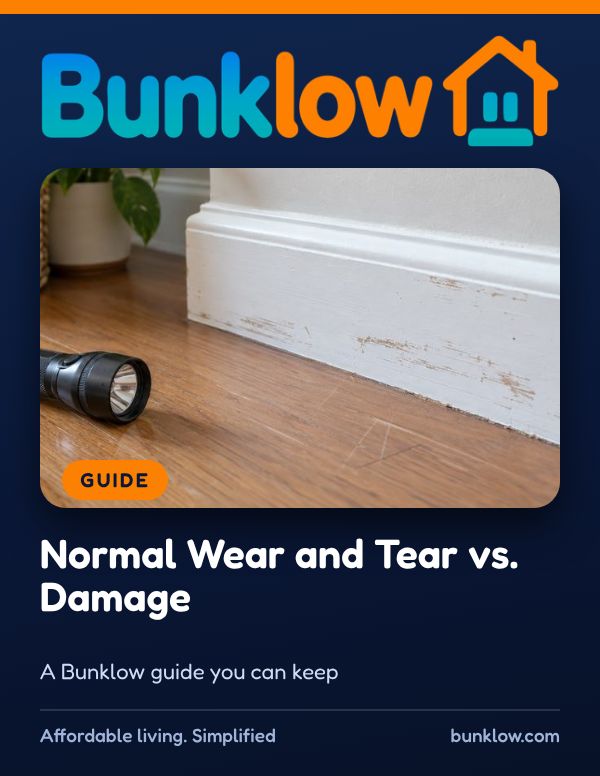
Guide · Renting and leases
Normal Wear and Tear vs. Damage
A friendly, practical guide to the difference between everyday living and damage, so move-out can be fair, calm and clear for everyone.
Where to start
- Something got damaged?
Please don’t worry. Accidents happen to everyone. See if something gets damaged.
- Not sure if it’s wear?
Ask: would this happen to a careful person just living here? Try wear or damage.
- Own the home?
Start with before move out.
The short version
Is it normal wear, or is it damage? Normal wear is what happens when people simply live in a home, carefully, over time. Damage is something beyond everyday living.
Usually normal wear: light scuffs, a few small nail holes, carpet worn in walkways, faded paint and blinds, loose handles from years of use.
Usually damage: large holes, pet stains, burns, broken blinds or fixtures, unapproved paint colors or changes, and a home left dirty.
A clear move-in report, with a comment on every item, is what shows the difference. Fair charges reflect the cost to repair, not upgrade, and the age of the item.
Every state handles deposits a little differently, so we'd gently encourage a quick look at your local rules. If you ever have questions, we would love to help.
Four simple rules
- 1Homes are meant to be lived in
Light scuffs, small nail holes and carpet that wears in walkways are part of everyday life. They are expected, and that is perfectly okay.
- 2Time matters
Paint, carpet and blinds all wear out over the years. The longer someone has lived in a home, the more wear is normal.
- 3Damage goes beyond living
Large holes, burns, pet stains, broken fixtures and missing items are beyond everyday living, whether they happened by accident or not.
- 4The move-in report decides
A clear move-in report with a comment on every item is what shows what changed. Without it, nobody can say for sure.
Wear or damage?
Real examples from the guide. Tap your answer for each one. These are usual answers, not rules; the move in report is what shows what changed.
If something gets damaged
- Please don’t worry. Accidents happen to everyone, and sharing them early is always the right thing to do.
- Take a clear photo, one wide and one close up.
- Share it in writing, the same day if you can, with whoever handles repairs.
- Ask before you try a fix yourself. A well meant repair with the wrong paint or part can turn a small fix into a bigger one.
- Keep a copy of what you sent, and any answer you receive.
- If a professional repair is needed, ask to receive a copy of the invoice. Clear records help everyone feel comfortable.
Describe, don’t just rate. “Fist sized hole, hallway, behind the door” is clear and fair. “Damaged wall” can mean almost anything.
A few helpful habits
- Write down where it is. “Living room, east wall, three small nail holes” is far clearer than “holes in wall.”
- Hanging pictures? Small nails leave tiny holes that are usually normal wear. Adhesive hooks and large anchors can pull off paint and leave bigger repairs. When in doubt, ask first.
- Rubber backed bath mats can leave yellow stains on vinyl floors that do not come out. A cloth mat, hung to dry between uses, avoids a surprise at move out.
- Walk the home together at move in, give every single item a comment, in any condition, and take photos to match.
For owners: before move out
From the guide’s own checklist. Tick each one as you go. Your ticks stay on this device. These are examples; your home may need others.
All done. A calm, clear move out starts here.
For owners: when charging for damage
From the guide’s own checklist. Tick each one as you go. Your ticks stay on this device. These are examples; your home may need others.
All done. Clear, fair charges keep a good relationship good, even at the end.
The useful life idea
Most things in a home have a useful life. Interior paint often lasts several years, carpet and blinds a bit longer.
- When something is damaged near the end of its life, a fair charge usually reflects only the life that was left, not the full cost of replacing it new.
- Every state handles deposits a little differently. A quick look at the official rules where your home is goes a long way, and a local landlord or tenant association or an attorney in your area can help if you are unsure.
Write down the date each item was last replaced or painted: carpet, paint, blinds and appliances. It makes fair charges simple, and it helps you plan updates between tenants.
Guides that go well with this one
How much do you remember?
4 quick questions from this guide, with a one line why for each. Totally optional, no sign in, and your answers are never saved.
Go deeper with The Perfect Move-Out Checklist Workbook
Simple, step by step checklists you can write in for moving out: giving notice, cleaning, the pre move out walk, deposits, renewals and more.
Keep the full guide handy
The PDF has everything: everyday habits, what to do when something goes wrong, common myths, helpful resources and plenty of real-world tips. Print it, save it or share it with anyone who could use it.
Download the PDFTake it with you
- The Perfect Move-Out Checklist WorkbookA fillable workbook with a screen version and an ink saver print version.See it in the shop
More guides



This guide shares general information to help you, and is not legal advice. Bunklow does not inspect properties or decide deposits.