

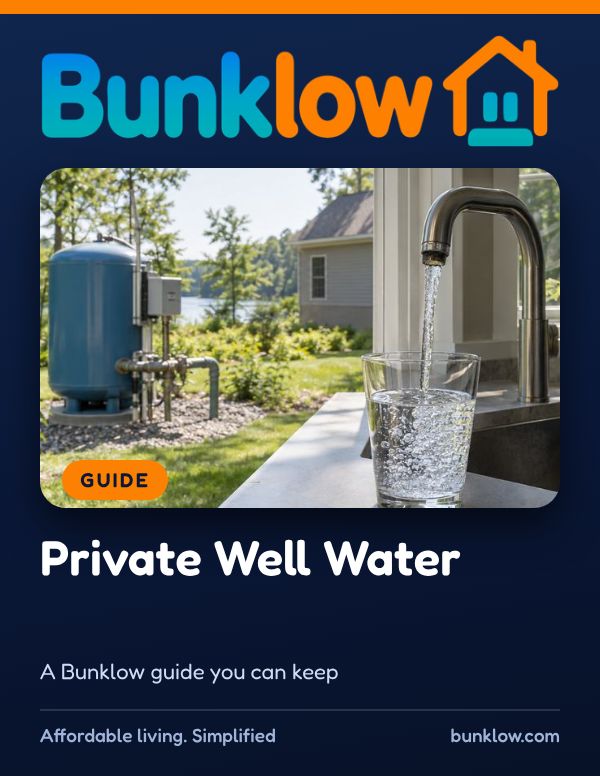
Guide · Home care
Private Well Water
A friendly, practical guide to living with a private well, from yearly testing and protecting the wellhead to what to do after a flood or a change in your water.
Where to start
- Water looks, smells or tastes different?
Switch to bottled water for drinking and cooking. See if the water changes or stops.
- After a flood or repairs?
Please don’t drink well water until it has been tested. See when to test beyond once a year.
- Everyday care?
Tick through the private well checklist.
The short version
A private well can provide wonderful water for many years. Keeping it safe is up to the people who own and use it.
The CDC recommends testing at least once a year for bacteria, nitrates, dissolved solids and pH, plus extra tests after floods, repairs or changes.
Keep the wellhead capped, clear and above ground, with fuel, chemicals and fertilizers kept well away.
If the water changes or stops, switch to bottled water, check for power issues, and share it right away so it can be tested.
Rules about wells differ from place to place, so we’d gently encourage a quick look at the rules where your home is. If you ever have questions, we would love to help.
Four simple rules
- 1Test every year
The CDC recommends testing well water at least once a year for bacteria, nitrates, dissolved solids and pH.
- 2Protect the wellhead
Keep the well cap secure, the ground sloped away, and chemicals and fertilizers well away from the well.
- 3Notice changes
A new taste, color or smell is a reason to test the water and share it right away.
- 4Test after floods and repairs
Flooding, nearby digging or work on the well can affect the water. Test before drinking.
Private well checklist
From the guide’s own checklist. Tick each one as you go. Your ticks stay on this device. These are examples; your home may need others.
All done. I hope everyone in your home enjoys safe, clean water from your well.
If the water changes or stops
- Take a breath. If the water looks, smells or tastes different, switch to bottled water for drinking and cooking.
- If there is no water, check whether the power is out or the breaker for the well pump has tripped.
- Note what changed and when, such as heavy rain, flooding, digging nearby or recent repairs. Those clues help find the cause.
- Take photos of discolored water or anything unusual at the wellhead.
- Share it in writing right away so the water can be tested and the well checked. You did exactly the right thing.
Most well pumps need electricity, so when the power goes out, the water usually goes with it. A small stash of drinking water makes an outage a lot less stressful.
When to test beyond once a year
These are common reasons from the guide, not a complete list.
- Known problems with wells nearby
- Flooding or land disturbance near the well
- Repairs to any part of the well system
- A change in the water’s taste, color or smell
- Someone in the home is pregnant, or a new baby joins the household
Your local or state health department can point you to certified laboratories and explain which extra tests make sense where you live.
For owners: before move in and each year
From the guide’s own checklist. Tick each one as you go. Your ticks stay on this device. These are examples; your home may need others.
All done. Picking one easy date, like the first day of spring, keeps it from being forgotten.
Guides that go well with this one
Helpful resources
The guide points to these for details. Rules differ from place to place, so the official pages where your home is are the best guide.
Like it on paper?
The printable checklist for this guide is fillable, with a screen version and an ink saver print version. Keep it on your phone or pin it to the fridge.
How much do you remember?
4 quick questions from this guide, with a one line why for each. Totally optional, no sign in, and your answers are never saved.
Go deeper with The Perfect Seasonal Home Care Checklist Workbook
Simple, step by step checklists you can write in, one topic at a time, to help any home stay warm, safe and dry through every season.
Keep the full guide handy
The PDF has everything: everyday habits, what to do when something goes wrong, common myths, helpful resources and plenty of real-world tips. Print it, save it or share it with anyone who could use it.
Download the PDFTake it with you
- Bunklow Home Guide 108: Private Well Hydropneumatic Water Storage Tank Air Pre-Charge ChecksA printable guide to private well hydropneumatic water storage tank air pre-charge checks, in plain steps.See it in the shop
- Plumbing and Water Checklist PackThe Plumbing and Water checklists in one pack, fillable on screen or printable.See it in the shop
More guides


This guide shares general information to help you, and is not legal, medical or health-code advice. Please use a state-certified laboratory for testing and a licensed well contractor for repairs. Bunklow does not inspect properties or make repairs.