

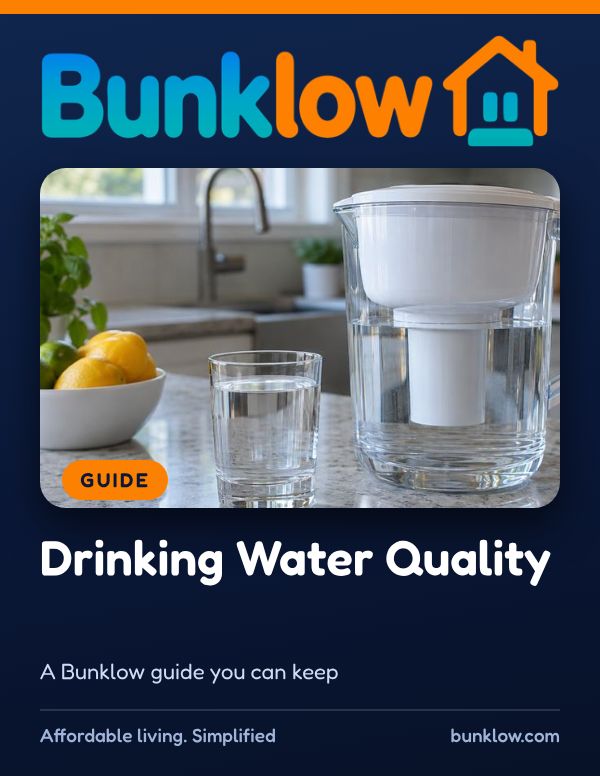
Guide · Safety and emergencies
Drinking Water Quality
A friendly, practical guide to understanding your tap water, from your yearly water quality report and lead in older plumbing to filters and boil water notices.
Where to start
- Water looks, smells or tastes wrong?
Use bottled water for drinking and cooking for now. See if the water looks or tastes wrong.
- Got a boil water notice?
Follow the utility’s instructions exactly. See a few more helpful habits.
- Want simple everyday steps?
Work through the safer water checklist.
The short version
Most tap water in the United States is safe, and a few simple facts help everyone keep it that way.
Read your utility’s yearly water quality report, use only cold water for drinking and cooking, and run the tap when water has been sitting.
Lead usually comes from older plumbing. Cleaning aerators and using a certified filter help, and boiling does not remove lead.
Follow every boil water notice, and share water that looks, smells or tastes different with your utility and the owner or manager.
Rules about water and plumbing differ from place to place, so we’d gently encourage a quick look at the rules where your home is. If you ever have questions, we would love to help.
Four simple rules
- 1Read your water report
Water utilities provide a yearly water quality report, often called a Consumer Confidence Report.
- 2Cold water for drinking and cooking
The EPA recommends using only cold tap water for drinking, cooking and making baby formula.
- 3Run it if it’s been sitting
If water hasn’t been used for hours, run the cold tap for a bit before drinking. Standing water can pick up more lead.
- 4Follow every notice
When the utility issues a boil water or do-not-drink notice, follow its instructions exactly.
Simple steps for safer water
From the guide’s own list. Tick each one as you go. Your ticks stay on this device. These are examples; your home may need others.
All done. Drink with confidence.
If the water looks or tastes wrong
- Take a breath. If the water looks, smells or tastes very different, use bottled water for drinking and cooking for now.
- Check whether neighbors notice the same thing, and look for utility notices or nearby street work.
- If water is brown after nearby work on the water main, run the cold tap until it clears, as the utility suggests.
- If it doesn’t clear, or the change came from inside the home, don’t keep running it for hours.
- Take a photo of the water in a clear glass, and note when you noticed the change.
- Share it in writing right away, and contact your utility.
You did exactly the right thing.
A few more helpful habits
- Certified filters: look for a filter certified to reduce the specific contaminant you are concerned about, like lead. The packaging should say what it is certified for.
- Boil water notices: follow the utility’s instructions for drinking, cooking, brushing teeth and making ice until the notice is lifted.
- Clean faucet aerators every few months.
Guides that go well with this one
Like it on paper?
The printable checklist for this guide is fillable, with a screen version and an ink saver print version. Keep it on your phone or pin it to the fridge.
How much do you remember?
4 quick questions from this guide, with a one line why for each. Totally optional, no sign in, and your answers are never saved.
Go deeper with The Perfect Seasonal Home Care Checklist Workbook
Simple, step by step checklists you can write in, one topic at a time, to help any home stay warm, safe and dry through every season.
Keep the full guide handy
The PDF has everything: everyday habits, what to do when something goes wrong, common myths, helpful resources and plenty of real-world tips. Print it, save it or share it with anyone who could use it.
Download the PDFTake it with you
- Bunklow Home Guide 109: Whole-House Potable Water Cartridge Filter Replacement and DepressurizationA printable guide to whole-house potable water cartridge filter replacement and depressurization, in plain steps.See it in the shop
- Bunklow Home Guide 111: Point-of-Use Reverse Osmosis (RO) Filter Changes and SanitizationA printable Bunklow guide to point-of-use reverse osmosis (ro) filter changes and sanitization: plain steps, how often to check, and when to call a pro.See it in the shop
- Plumbing and Water Checklist PackThe Plumbing and Water checklists in one pack, fillable on screen or printable.See it in the shop
More guides
This guide shares general information to help you, and is not legal, medical or health-code advice. For health questions, please talk with a doctor, and for testing, use a certified laboratory. Bunklow does not test water or make repairs.