

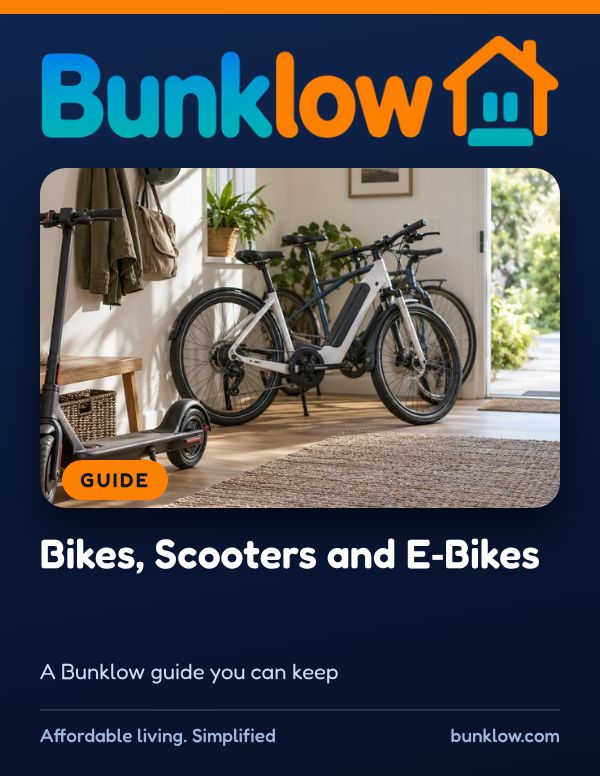
Guide · Safety and emergencies
Bikes, Scooters and E-Bikes
A friendly, practical guide to storing bikes and scooters kindly and charging e-bike and scooter batteries safely, so everyone gets home in one piece.
Where to start
- A battery is hissing, smoking or on fire?
Get everyone out, close the door and call 911 from outside. See if a battery overheats or smokes.
- About to charge?
Be there while it charges, on a hard surface away from anything that can burn. The checklist has the habits.
- Owner of a building?
The short version
Bikes, scooters and e-bikes are wonderful ways to get around, and their lithium-ion batteries deserve real respect.
Charge only while you are home and awake, on a hard surface away from anything that can burn, using the maker’s charger.
Store bikes and scooters in designated areas, never in hallways or by exits, and recycle old batteries instead of trashing them.
If a battery hisses, smokes or catches fire, get out, close the door and call 911. Never try to fight it yourself.
Rules about e-bikes in buildings differ from place to place, so we’d gently encourage a quick look at the rules where your home is. If you ever have questions, we would love to help.
Four simple rules
- 1Be there while it charges
The CPSC advises always being present when charging, and never charging while asleep or away.
- 2Use the right charger
Use only the charger and batteries made or approved by the device’s maker.
- 3Keep exits clear
Never store or charge bikes and scooters where they could block a door, hallway or stairway.
- 4Know the warning signs
Heat, swelling, odd smells, hissing or leaking mean stop using the battery right away.
Your safe charging and storage checklist
From the guide’s own checklist. Tick each one as you go. These are examples; your home may need others.
All done. Everyone gets home in one piece.
If a battery overheats or smokes
- If a battery is hissing, popping, smoking or on fire, get everyone out right away and close the door behind you.
- Call 911 from outside. Lithium ion battery fires can be intense and can reignite.
- Never try to put out a burning battery yourself or move it while it is smoking.
- If a battery is just very hot or swollen and not smoking, unplug it if you can safely reach the plug, and stay away from it.
- Once the fire department says it is safe, take photos of any damage.
- Share what happened in writing right away so damage can be repaired and the building checked.
For owners: when a battery concern is shared
- Respond quickly and kindly to reports of bikes or scooters blocking exits.
- Treat a swollen, smoking or overheating battery as urgent, and contact the fire department if needed.
- Remind residents of charging and storage rules in writing, without singling anyone out in public.
- After any battery incident, check smoke alarms, wiring and the affected areas with qualified professionals.
- Write down what was reported, what was done and when, and follow up to make sure all is well.
Guides that go well with this one
How much do you remember?
4 quick questions from this guide, with a one line why for each. Totally optional, no sign in, and your answers are never saved.
Go deeper with The Perfect Move-In Checklist Workbook
Simple, step by step checklists you can write in for moving in: the move in walk, moving day, your first week, utilities, keys and more.
Keep the full guide handy
The PDF has everything: everyday habits, what to do when something goes wrong, common myths, helpful resources and plenty of real-world tips. Print it, save it or share it with anyone who could use it.
Download the PDFMore guides

This guide shares general information to help you, and is not legal, medical or safety-code advice. Please follow your device maker’s instructions. Bunklow does not inspect properties or devices.