

Guide · Safety and emergencies
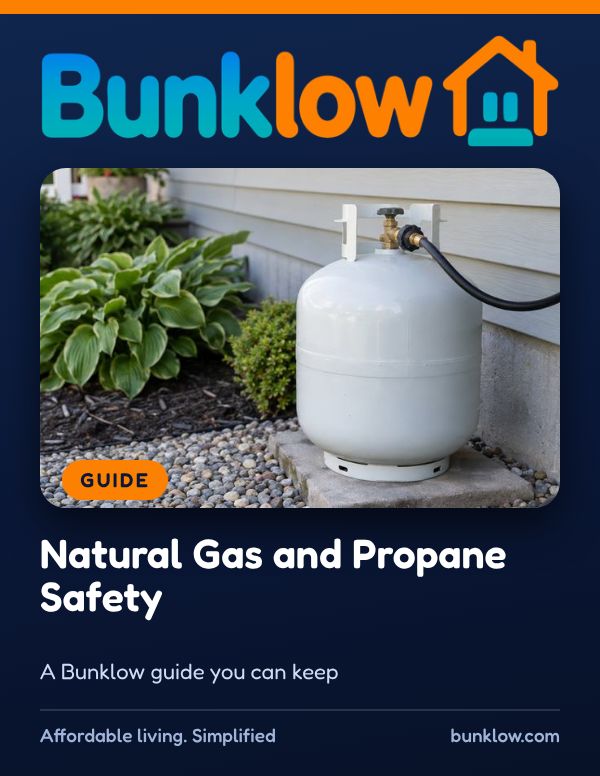
Natural Gas and Propane Safety
A friendly, practical guide to living safely with gas and propane, from recognizing a leak and what to do right away to appliance care, carbon monoxide and calling 811.
Where to start
- Smell gas right now?
Get everyone out first, then call from outside. See if you smell gas.
- Just moved in?
Find the gas meter, test the carbon monoxide alarms and save the emergency number. Tick through gas safe habits.
- Own the home?
Start with before move in and each year.
The short version
Gas heats many homes and is safe when cared for, and knowing the warning signs keeps everyone safe.
If you smell gas, get everyone out right away, don’t create sparks, and call the gas company or 911 from outside.
Install and test carbon monoxide alarms on every level, keep appliance areas clear, and have gas appliances serviced yearly.
Keep propane tanks outside, never heat the home with the oven, and call 811 before any digging.
Gas safety rules differ from place to place, so we’d gently encourage a quick look at the rules where your home is. If you ever have questions, we would love to help.
Four simple rules
- 1Smell gas? Get out first
Leave the home right away, then call the gas company or 911 from a safe distance outside.
- 2Don’t create a spark
Don’t flip switches, use phones inside, light matches or start a car near the leak.
- 3Carbon monoxide alarms on every level
The CPSC recommends CO alarms on every level of the home and outside sleeping areas.
- 4Call 811 before you dig
811 is the free national service that marks buried gas and utility lines before digging.
If you smell gas
- Leave the home right away, taking everyone with you, including pets.
- Don’t flip light switches, unplug anything, light anything or use your phone inside.
- Leave the door open behind you if you can, and walk well away from the home.
- Call the gas company’s emergency number or 911 from outside.
- Don’t go back inside until the gas company or fire department says it is safe.
- Let the owner or manager know once you are safe. You did exactly the right thing.
Save the gas company’s emergency number in your phone today. In a leak, you’ll be calling from outside, and you won’t want to search for it.
Signs of a gas leak or carbon monoxide
Common examples, not a complete list. Any of them is a reason to act right away.
- A rotten egg or sulfur smell.
- A hissing or blowing sound near a gas line or appliance.
- Dead plants or bubbling water near an outdoor line.
- Headache, dizziness, weakness, nausea, sleepiness or confusion that improve outside can point to carbon monoxide, which has no color or smell. Get everyone into fresh air right away, call 911 and see a doctor.
Ask your gas company for a scratch and sniff card if they offer one, so everyone in the home, including kids, knows what a gas leak smells like.
Gas safe habits
From the guide’s own checklist. Tick each one as you go. Your ticks stay on this device. These are examples; your home may need others.
All done. Thank you for helping everyone in your home feel safe and ready.
Please never do these
- Please don’t try to find a leak yourself or stay inside to open windows.
- Please don’t use the oven or stove to heat the home.
- Please don’t use grills, generators or camp stoves indoors or in a garage. Run portable generators only outdoors, well away from doors, windows and vents.
- Please don’t store propane tanks indoors or in a garage.
- After a gas shutoff, only the gas company or a qualified technician should turn it back on and relight pilot lights.
For owners: before move in and each year
From the guide’s own checklist. Tick each one as you go. Your ticks stay on this device. These are examples; your home may need others.
All done. Thank you for keeping every resident safe.
Guides that go well with this one
Helpful resources
The guide points to these for details. Rules differ from place to place, so the official pages where your home is are the best guide.
Like it on paper?
The printable checklist for this guide is fillable, with a screen version and an ink saver print version. Keep it on your phone or pin it to the fridge.
How much do you remember?
4 quick questions from this guide, with a one line why for each. Totally optional, no sign in, and your answers are never saved.
Go deeper with The Perfect Seasonal Home Care Checklist Workbook
Simple, step by step checklists you can write in, one topic at a time, to help any home stay warm, safe and dry through every season.
Keep the full guide handy
The PDF has everything: everyday habits, what to do when something goes wrong, common myths, helpful resources and plenty of real-world tips. Print it, save it or share it with anyone who could use it.
Download the PDFTake it with you
- Bunklow Home Guide 113: Natural Gas Exterior Supply Meter Manual Quarter-Turn Shut-Off ProceduresA printable guide to natural gas exterior supply meter manual quarter-turn shut-off procedures, in plain steps.See it in the shop
- Bunklow Home Guide 114: Stationary Propane Tank Percentage Dial Reading and Cold-Weather PacingA printable guide to stationary propane tank percentage dial reading and cold-weather pacing, in plain steps.See it in the shop
More guides


This guide shares general information to help you, and is not legal or safety-code advice. Always follow the instructions of your gas company and emergency responders. Bunklow does not inspect properties or make repairs.